
A bowl of roasted butternut squash soup brings deep, natural sweetness and a velvety texture that feels satisfying in any cool-weather meal. Roasting the squash first develops caramelized edges that add depth far beyond a basic boiled soup.
This version focuses on simple preparation with real ingredients that blend into a smooth, rich puree. The result is a comforting soup that works well as a starter or a light main dish.
Warm spices, slow-roasted vegetables, and a creamy finish come together in a way that feels balanced and nourishing without being complicated.
Ingredients Overview
Butternut squash is the heart of this soup. When roasted, it becomes soft, slightly caramelized, and naturally sweet. This roasting step is important because it builds flavor that cannot be achieved through boiling alone. The squash texture also blends smoothly, giving the soup its signature creaminess.
Olive oil is used to coat the squash before roasting. It helps the edges brown slightly in the oven while adding a subtle richness to the final soup. A neutral oil can also be used if preferred.
Onion and garlic form the aromatic base. When sautéed, they release sweetness and depth that balance the squash. Garlic adds a gentle sharpness that rounds out the flavor profile without overpowering it.
Vegetable broth serves as the liquid base. It carries all the roasted and sautéed flavors while keeping the soup light enough to blend easily. Chicken broth can be used if a deeper savory taste is preferred.
Carrots are often added for extra sweetness and color. They also support the smooth texture once blended. Their natural sugars blend well with roasted squash.
Spices like cinnamon, nutmeg, and black pepper bring warmth and subtle complexity. They do not dominate the soup but enhance the natural flavor of the vegetables.
Cream or coconut milk is added at the end for a silky finish. Cream gives a richer texture, while coconut milk adds a light sweetness and dairy-free option.
Salt ties everything together by balancing sweetness and savory notes. It is adjusted at the end after blending to control the final flavor.
Ingredients
1 large butternut squash, peeled and cubed
2 tablespoons olive oil
1 medium onion, chopped
3 cloves garlic, minced
2 medium carrots, chopped
4 cups vegetable broth
1/2 teaspoon cinnamon
1/4 teaspoon nutmeg
1/2 teaspoon black pepper
1 teaspoon salt
1/2 cup heavy cream or coconut milk
Optional pumpkin seeds for topping
Optional drizzle of olive oil
Step-by-Step Instructions
Start by preparing the butternut squash. Peel it carefully, remove the seeds, and cut it into evenly sized cubes. Even sizing helps the squash roast at the same rate.
Place the squash on a baking sheet and drizzle with olive oil. Toss until all pieces are lightly coated. Spread them out in a single layer so they roast instead of steam.
Roast the squash in a preheated oven at 400°F until the edges are golden and the inside is soft. This usually takes around 25 to 30 minutes.
While the squash roasts, heat a large pot over medium heat. Add a small amount of olive oil and sauté the chopped onion until it becomes soft and translucent.
Add minced garlic and cook briefly until fragrant. Stir constantly to prevent burning, as garlic cooks quickly.
Add chopped carrots to the pot and cook for several minutes to soften slightly. This builds a layered base of flavor for the soup.
Once the squash is finished roasting, add it to the pot with the onions, garlic, and carrots. Stir everything together.
Pour in the vegetable broth and bring the mixture to a gentle simmer. Allow it to cook for about 10 minutes so the flavors can blend.
Add cinnamon, nutmeg, black pepper, and salt. Stir well and adjust seasoning as needed based on taste.
Remove the pot from heat and blend the soup using an immersion blender until smooth. A countertop blender can also be used in batches if needed.
Return the blended soup to low heat and stir in cream or coconut milk. Mix until fully combined and smooth.
Taste again and adjust salt or spice if necessary. The texture should be creamy and pourable, not too thick or too thin.
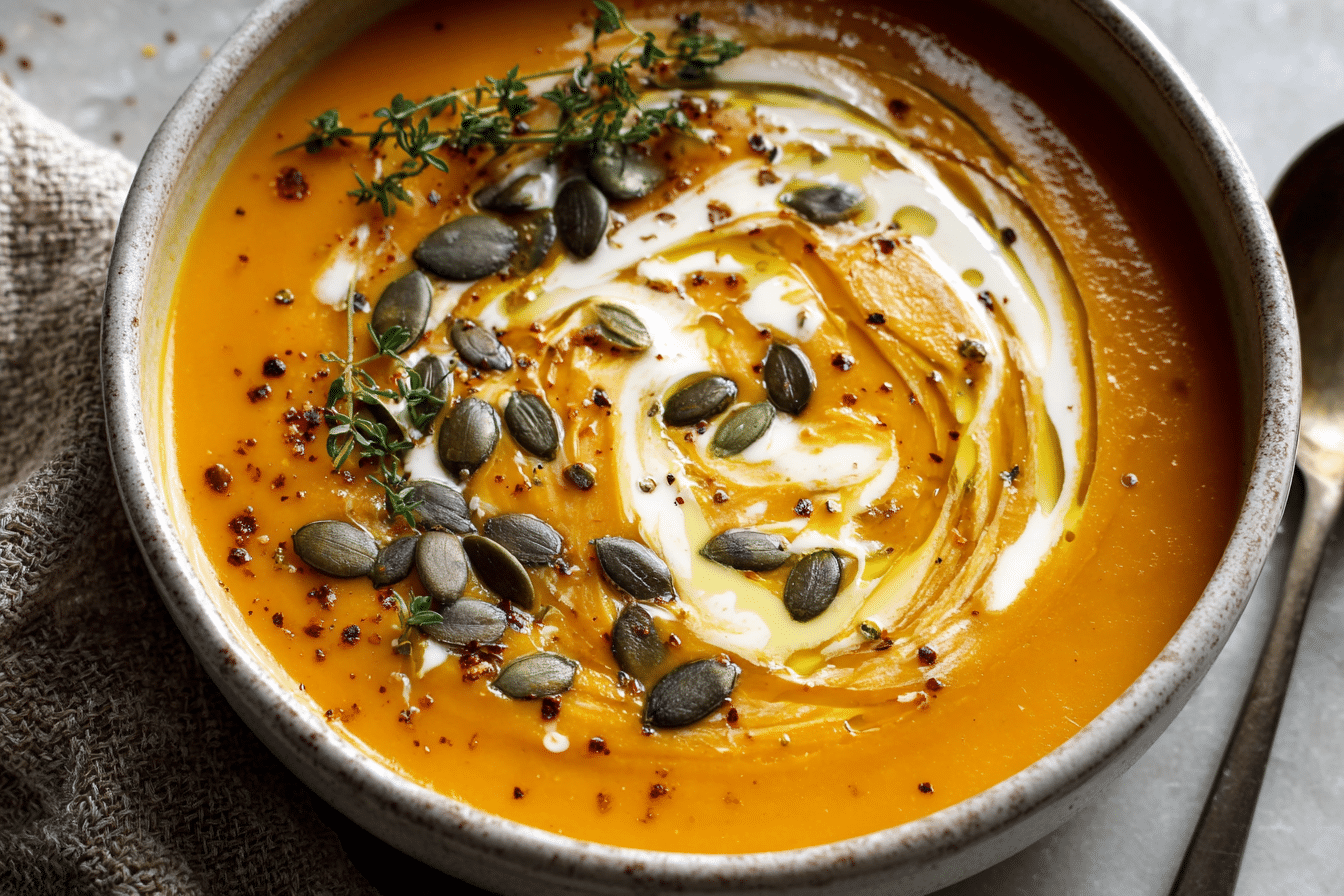
Serve warm with optional pumpkin seeds or a light drizzle of olive oil on top.
Common mistakes include skipping the roasting step, which reduces flavor depth, or adding too much liquid too early, which can thin out the soup.
Tips, Variations & Substitutions
For a deeper flavor, garlic cloves can be roasted along with the squash instead of sautéed. This gives a softer, sweeter garlic note.
Coconut milk creates a dairy-free version with a light tropical sweetness. It also pairs well with the natural sweetness of the squash.
A pinch of cayenne pepper can be added for a mild heat contrast. This works well with the creamy texture of the soup.
Apple can be added with the carrots for a slightly fruity undertone. It blends smoothly and enhances natural sweetness.
For a thicker soup, reduce the amount of broth slightly. For a thinner texture, add extra broth or a splash of water after blending.
Serving Ideas & Occasions
Roasted butternut squash soup works well as a starter for dinners or as a light meal with bread or salad. It is often served during cooler months when warm, smooth dishes are preferred.
It pairs nicely with toasted sourdough, grilled cheese sandwiches, or simple herb croutons. These add texture contrast to the creamy soup.
For drinks, herbal tea or light white wine complements the subtle sweetness and spice of the dish.
This soup also stores well, making it suitable for meal prep or batch cooking for several days.
Nutritional & Health Notes
Butternut squash provides fiber, vitamins A and C, and natural carbohydrates that give steady energy. It is naturally low in fat and rich in antioxidants.
Carrots add additional vitamins and natural sweetness without added sugar. Garlic and onion contribute small amounts of beneficial plant compounds.
Using coconut milk instead of cream reduces dairy content while still maintaining a creamy texture. Portion size can be adjusted depending on dietary needs.
This soup is naturally vegetarian and can be made vegan with plant-based cream or coconut milk.
FAQs
Can I make this soup ahead of time?
Yes, this soup stores very well in the refrigerator for several days. In fact, the flavor often improves after resting overnight. Reheat it gently on the stove and stir occasionally to restore its creamy texture.
Can I freeze roasted butternut squash soup?
Yes, it freezes well. Allow the soup to cool completely before storing it in airtight containers. When reheated, stir well and add a splash of broth or water if it thickens too much.
Do I have to roast the squash first?
Roasting is highly recommended because it develops natural sweetness and depth. Boiling the squash will still work, but the flavor will be milder and less complex.
Can I use frozen butternut squash?
Yes, frozen squash can be used if fresh is not available. It may not caramelize the same way when roasted, but it still blends into a smooth soup.
What can I use instead of cream?
Coconut milk, cashew cream, or even oat milk can be used instead of heavy cream. Each option slightly changes the flavor but keeps the soup creamy.
How do I make the soup thicker?
Reduce the amount of broth or simmer the blended soup longer to allow excess liquid to evaporate. This creates a thicker, more concentrated texture.
What toppings work well with this soup?
Pumpkin seeds, croutons, a drizzle of olive oil, or a sprinkle of black pepper all work well. Fresh herbs like parsley or thyme also add a light finishing touch.
Roasted Butternut Squash Soup: Fall Comfort Food at Its Best
Roasted Butternut Squash Soup is a smooth, creamy blend of roasted squash, warm spices, and broth for a comforting and flavorful meal.
Ingredients
1 butternut squash
2 tbsp olive oil
1 onion
3 cloves garlic
2 carrots
4 cups vegetable broth
1/2 tsp cinnamon
1/4 tsp nutmeg
1/2 tsp black pepper
1 tsp salt
1/2 cup cream or coconut milk
Instructions
- Roast cubed squash at 400°F until tender.
- Sauté onion and garlic in a pot.
- Add carrots and cook briefly.
- Add roasted squash and broth.
- Simmer for 10 minutes.
- Add spices and mix well.
- Blend until smooth.
- Stir in cream and serve warm.
Notes
Roasting the squash first is key for deeper flavor and natural sweetness.
Prep Time:
15 minutes
Cook Time:
40 minutes
Total Time:
55 minutes
Yield:
4 servings
Calories:
220 per serving
Course:
Soup
Cuisine:
American-Inspired