
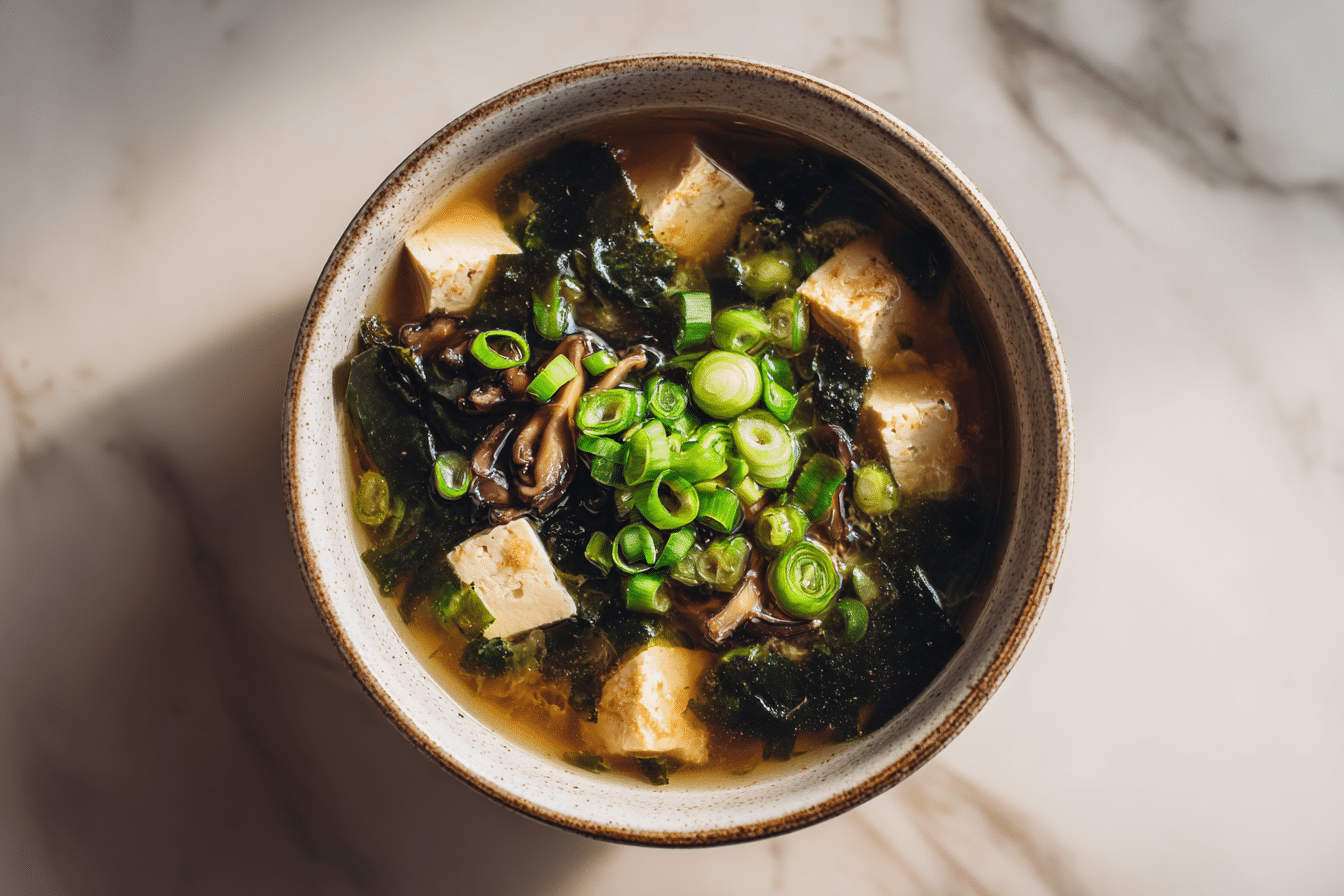
10 minute miso soup is a light, nourishing Japanese-inspired soup made with a simple dashi broth, miso paste, soft tofu, and seaweed. It is known for its clean, savory flavor and quick preparation, making it one of the fastest homemade soups that still feels deeply comforting and balanced.
This soup is traditionally served as part of Japanese meals, but it also works perfectly as a quick breakfast, light lunch, or soothing side dish. The combination of umami-rich broth and gentle ingredients creates a warm bowl that feels both simple and satisfying.
What makes this version special is its speed and simplicity. With just a few pantry staples, a flavorful miso soup can be ready in about 10 minutes without losing its authentic character.
Ingredients Overview
Dashi is the traditional base of miso soup. It is a light Japanese stock usually made from kombu (seaweed) and bonito flakes, although instant dashi granules are commonly used for convenience. It provides a deep umami foundation without being heavy, allowing the other ingredients to shine.
Miso paste is the key flavor component. It is made from fermented soybeans and adds a salty, savory depth to the soup. There are different types, including white miso (milder and slightly sweet) and red miso (stronger and more intense). White miso is often used for quick miso soup because it dissolves easily and has a gentle flavor.
Tofu adds softness and protein to the soup. Silken tofu is most commonly used because of its delicate texture, which contrasts with the light broth. It absorbs the flavor of the soup while remaining smooth and tender.
Wakame seaweed is another essential ingredient. It rehydrates quickly in hot broth and adds a slightly chewy texture along with a mild ocean-like flavor. It also contributes minerals and a subtle depth to the soup.
Green onions (scallions) are used as a fresh garnish. They add a light sharpness and color contrast that balances the soft tofu and savory broth.
Water or prepared dashi stock forms the base liquid. When using instant dashi, it quickly transforms plain water into a flavorful broth that mimics traditional preparation.
Optional ingredients like mushrooms, spinach, or radish can be added for extra texture and nutrition. These additions keep the soup light while making it more filling.
Ingredients
4 cups water
2 teaspoons instant dashi granules (or prepared dashi stock)
3 tablespoons white miso paste
1/2 cup silken tofu, cubed
2 tablespoons dried wakame seaweed
2 green onions, finely sliced
Optional:
1/2 cup sliced mushrooms
1 cup spinach leaves
Step-by-Step Instructions
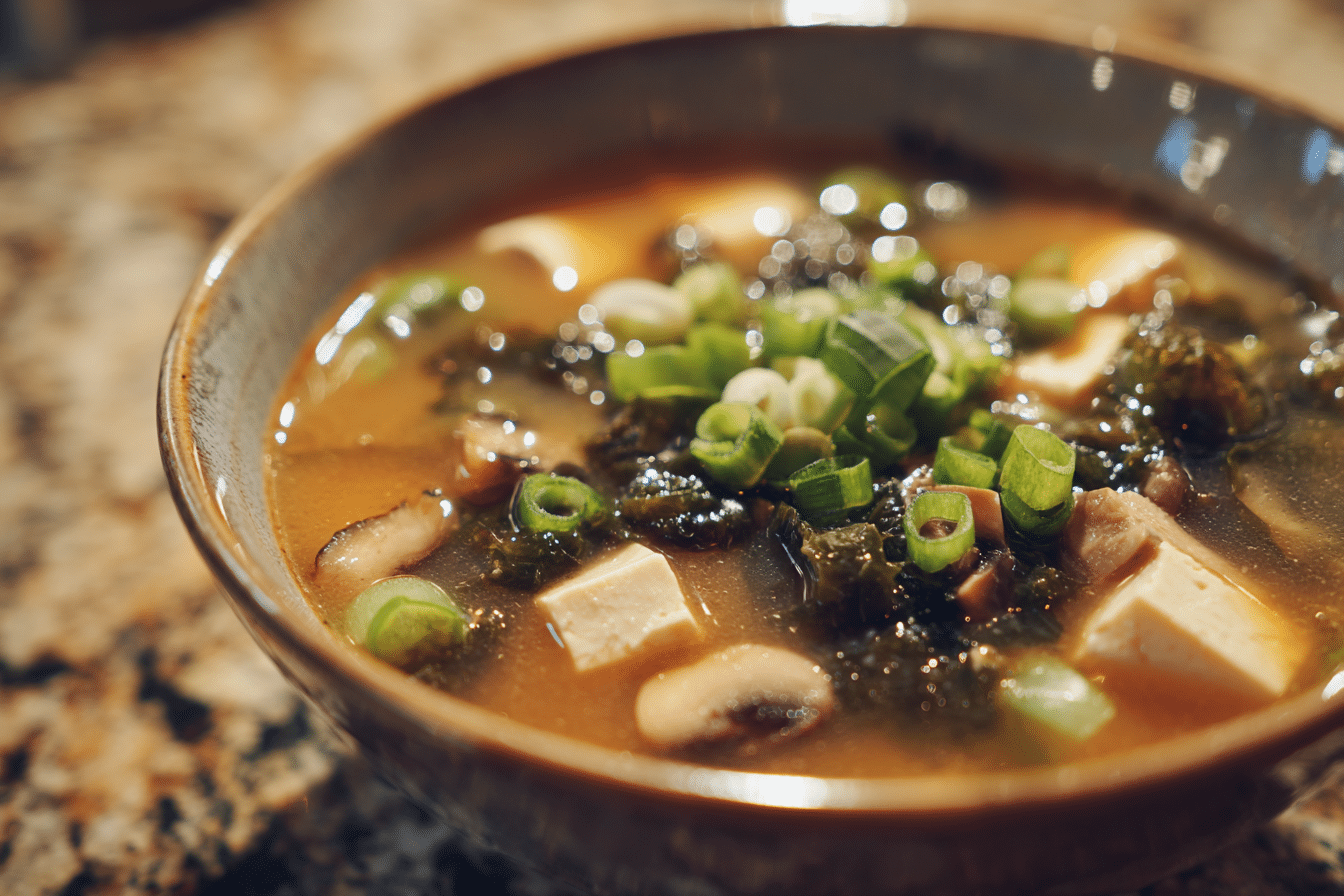
Start by preparing the broth. In a medium pot, add water and heat it over medium heat until warm but not boiling.
If using instant dashi granules, stir them into the warm water until fully dissolved. This creates a quick, flavorful base for the soup.
Add dried wakame seaweed to the pot. Allow it to soak for about 2 to 3 minutes so it softens and expands. It will absorb liquid quickly and become tender.
While the wakame is rehydrating, cut the silken tofu into small, even cubes. Handle it gently to avoid breaking its delicate texture.
Reduce the heat to low. It is important not to boil the soup after adding miso, as high heat can affect its flavor and beneficial qualities.
In a small bowl, take a ladle of warm broth and mix it with the miso paste. Stir until the miso dissolves completely and becomes smooth. This step helps prevent clumping in the soup.
Slowly pour the dissolved miso mixture back into the pot while stirring gently. Make sure it is evenly distributed throughout the broth.
Add the cubed tofu to the pot. Stir carefully to avoid breaking the pieces, allowing them to warm through in the hot broth.
If using optional ingredients like mushrooms or spinach, add them at this stage. Let them cook gently for 1 to 2 minutes until softened.
Taste the soup and adjust if needed, although miso soup is typically not heavily seasoned beyond the miso itself.
Remove from heat once everything is warmed through. Avoid boiling to preserve the delicate flavor of the miso.
Ladle the soup into bowls and top with sliced green onions for freshness and color.
Serve immediately while warm and comforting.
Tips, Variations & Substitutions
White miso is ideal for beginners because it has a mild, slightly sweet flavor. Red miso can be used for a stronger, more intense soup but should be added in smaller amounts.
If instant dashi is not available, a simple kombu and mushroom broth can be used as a vegetarian alternative. It still provides a rich umami base.
Firm tofu can be used instead of silken tofu if a sturdier texture is preferred. It holds its shape better but is slightly less delicate.
Adding mushrooms like shiitake or enoki enhances the umami flavor and makes the soup more filling. They cook quickly and blend well with the broth.
Spinach or bok choy can be added for extra greens and nutrition. These should be added at the end so they stay bright and slightly crisp.
A small splash of soy sauce can be used if a stronger salty depth is desired, although traditional miso soup usually relies only on miso for seasoning.
Serving Ideas & Occasions
10 minute miso soup is commonly served as part of Japanese meals alongside rice, fish, or noodles. It also works well as a light starter before a main dish.
It can be enjoyed on its own for a quick breakfast or a soothing evening meal. Its light nature makes it suitable for any time of day.
The soup pairs well with sushi, rice bowls, or grilled vegetables, balancing richer dishes with its clean and savory broth.
It is also a comforting option when a warm, gentle meal is preferred without heaviness.
Nutritional & Health Notes
Miso soup is naturally light and low in calories while still providing essential nutrients. Miso paste contains probiotics from fermentation, which can support digestion.
Tofu adds plant-based protein and calcium, making the soup more balanced. Wakame seaweed contributes minerals like iodine and magnesium.
Because the soup is broth-based, it is hydrating and easy to digest. It is often enjoyed as part of balanced meals rather than a heavy standalone dish.
Sodium content can vary depending on the miso used, so portion control is helpful for those monitoring salt intake.
FAQs
Can I make miso soup without dashi?
Yes, but the flavor will be lighter. Dashi provides the traditional umami base, but you can use vegetable broth or kombu-infused water as an alternative. While the taste will not be exactly the same, it still creates a warm and comforting soup.
What type of miso is best for beginners?
White miso is the best choice for beginners because it has a mild, slightly sweet flavor and dissolves easily into broth. It creates a gentle soup that is not too salty or strong, making it ideal for quick preparation.
Can I boil miso soup?
It is not recommended to boil miso soup after adding the miso paste. High heat can reduce the flavor and affect the quality of the miso. Instead, keep the soup at a gentle simmer or low heat when combining ingredients.
Can I use regular tofu instead of silken tofu?
Yes, firm tofu can be used if you prefer a sturdier texture. Silken tofu is softer and more delicate, while firm tofu holds its shape better in the soup. Both work well depending on preference.
How do I store leftover miso soup?
Leftover miso soup can be stored in the refrigerator for up to two days. It should be reheated gently over low heat without boiling. Fresh green onions can be added after reheating for better flavor.
Can I add vegetables to miso soup?
Yes, vegetables like spinach, mushrooms, bok choy, or carrots can be added. They should be cut into small pieces and added during the final cooking stage so they stay tender but not overcooked.
Is miso soup healthy?
Miso soup is considered light and nutritious. It contains probiotics from fermented miso, plant-based protein from tofu, and minerals from seaweed. It is low in calories and often included in balanced diets.
10 Minute Miso Soup
10 Minute Miso Soup is a quick Japanese-style broth made with miso paste, tofu, seaweed, and dashi for a light and comforting meal.
Ingredients
4 cups water
2 tsp dashi granules
3 tbsp miso paste
1/2 cup tofu
2 tbsp wakame
2 green onions
Optional mushrooms
Optional spinach
Instructions
- Heat water with dashi.
- Add wakame and soak.
- Dissolve miso in broth.
- Add tofu gently.
- Add vegetables if using.
- Warm without boiling.
- Stir lightly and taste.
- Garnish and serve.
Notes
Do not boil after adding miso to preserve flavor and aroma.
Prep Time:
5 minutes
Cook Time:
5 minutes
Total Time:
10 minutes
Yield:
4 servings
Calories:
90 per serving
Course:
Soup
Cuisine:
Japanese-Inspired