
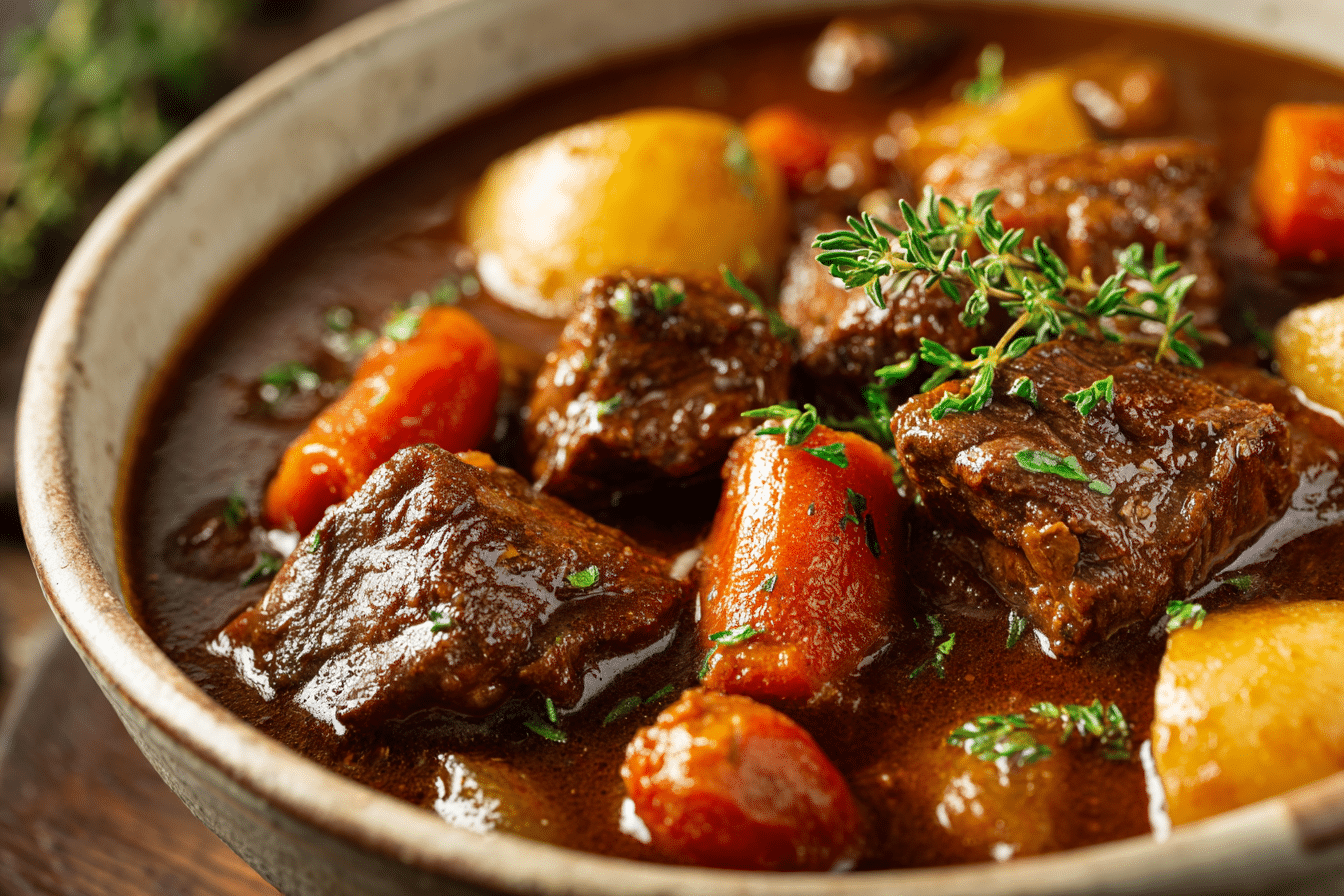
When colder days roll in and you’re craving something hearty and soul-warming, few dishes hit the spot like a rich, comforting beef stew. This ultimate beef stew recipe brings tender chunks of beef, savory vegetables, and a thick, flavorful broth together in one deeply satisfying pot. It’s the kind of meal that simmers slowly, filling your home with irresistible aromas and delivering spoonful after spoonful of comfort.
Every bite offers melt-in-your-mouth beef, soft but sturdy vegetables, and a gravy-like sauce that clings to everything just right. It’s wholesome, unfussy, and full of depth—perfect for family dinners, weekend meal prep, or anytime you need a comforting classic.
You don’t need any fancy equipment or culinary tricks. Just simple ingredients, a little time, and one pot. This stew is hearty, timeless, and made to be shared.
Ingredients Overview
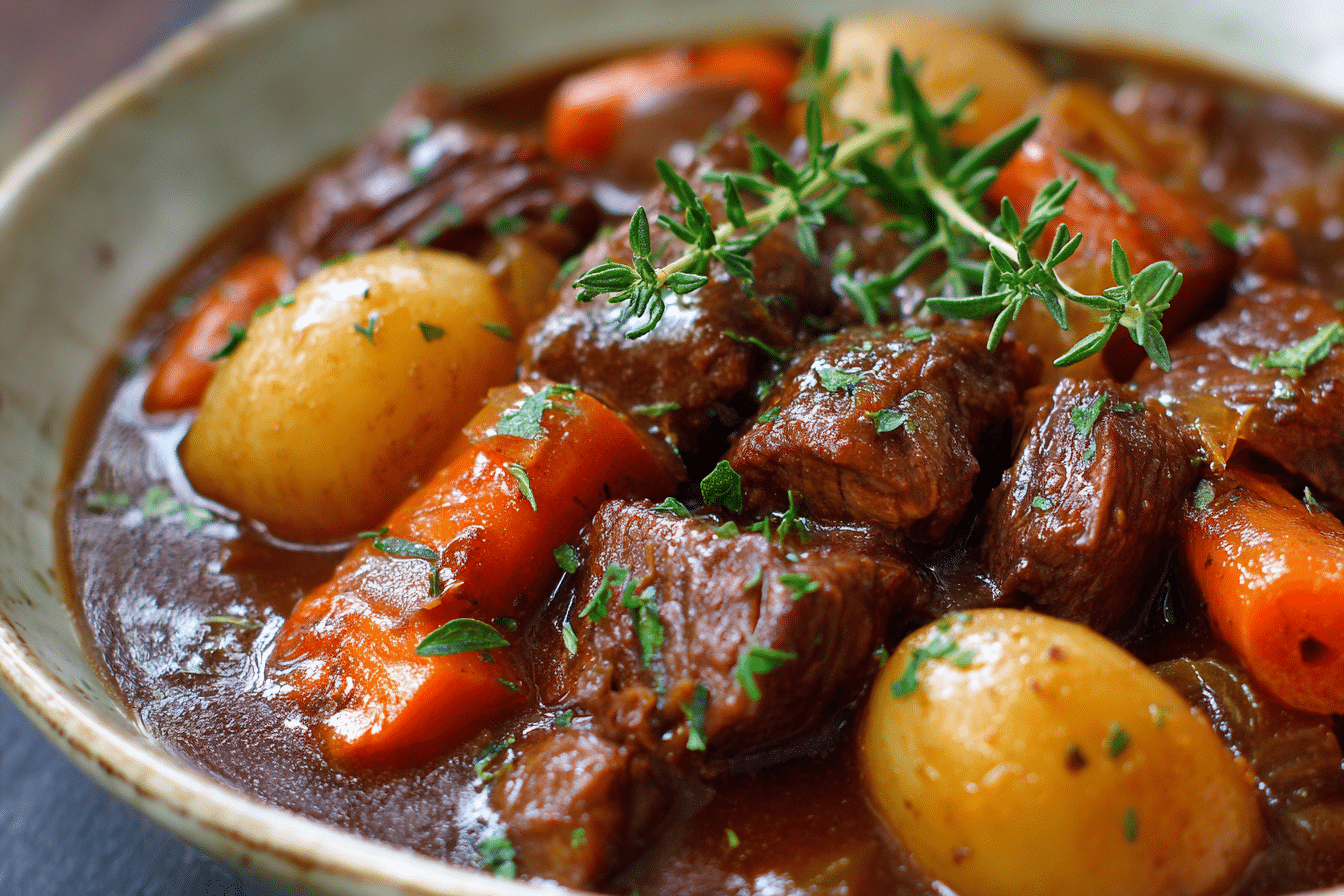
This recipe relies on staple ingredients that work in harmony to create a rich, layered flavor. Let’s walk through the essentials and what each brings to the dish.
Beef chuck: Known for its marbling and connective tissue, chuck roast is ideal for long simmering. As it cooks, it turns into tender, juicy pieces that soak up all the flavors of the stew. If needed, bottom round or brisket can be used instead.
Carrots: Carrots add sweetness and balance the deep savory notes of the broth. They also hold up well over long cooking times. Slice them thick to avoid mushiness.
Potatoes: Yukon Gold and red potatoes are best here. They’re firm enough to stay intact yet tender when fully cooked. If you prefer a creamier texture, russets are a softer alternative.
Celery: While mild, celery adds a light aromatic flavor that complements the onions and carrots. If you’re not a fan, you can omit it without ruining the dish.
Onions: Cooked down until golden and soft, onions provide a subtle sweetness and base for the stew. Yellow onions are standard, but white or even shallots can work in a pinch.
Garlic: Garlic is essential for its aromatic boost. It deepens the flavor profile and adds a subtle punch.
Tomato paste: A small amount adds body and umami to the broth, giving it depth without overpowering the dish.
Beef broth: A good quality, preferably low-sodium broth forms the base of the stew. Homemade or store-bought both work—just choose something rich and flavorful.
Red wine: A splash of red wine brings acidity and richness. It balances the heaviness of the stew. Choose a dry wine like cabernet or pinot noir. No wine? Just add more broth.
Flour: Lightly coating the beef in flour helps it brown better and contributes to the thickness of the final stew.
Bay leaves and thyme: These herbs are the backbone of traditional stew flavor. Use dried or fresh, and let them infuse slowly as the stew cooks.
Frozen peas (optional): Added at the end, peas give a pop of color and a touch of sweetness. They’re a simple way to freshen up the dish.
Step-by-Step Instructions
-
Prep the meat: Cut the beef into chunks around 1½ inches in size. Pat dry with paper towels to remove excess moisture. Toss with flour, salt, and pepper until lightly coated.
-
Sear the beef: In a large pot or Dutch oven, heat oil over medium-high heat. Working in batches, brown the beef on all sides. Avoid overcrowding to ensure a proper sear. Once browned, remove the meat and set aside.
-
Cook aromatics: Add chopped onions to the same pot. Sauté for about 5 minutes until softened. Stir in garlic and tomato paste, cooking for another minute until fragrant and slightly caramelized.
-
Deglaze: Pour in the red wine, scraping up any bits stuck to the bottom of the pot. Let the wine simmer for a couple of minutes to reduce slightly.
-
Assemble the stew: Return the beef to the pot. Add chopped carrots, potatoes, and celery. Pour in beef broth to cover everything. Drop in bay leaves and thyme.
-
Simmer low and slow: Bring the stew to a light boil, then immediately lower the heat. Cover and let it simmer gently for 2 to 2½ hours, stirring occasionally. The beef should be fork-tender by the end.
-
Add finishing touches: In the last 10 minutes, stir in peas if using. Taste and adjust seasoning.
-
Let it rest: Once cooked, remove bay leaves and let the stew sit for about 10 minutes before serving. This helps the flavors settle.
Avoid these common mistakes:
-
Don’t skip drying the meat—it’s crucial for browning.
-
Don’t crowd the pot when searing.
-
Be patient. Rushing the cooking process leads to chewy beef.
-
Skipping the wine deglaze step means losing a lot of built-up flavor.
Tips, Variations & Substitutions
Smart cooking tips:
-
Chop vegetables evenly so they cook at the same rate.
-
Prep all ingredients before starting for a smoother process.
-
If your broth isn’t very rich, consider adding a bouillon cube or a dash of Worcestershire.
Flavor variations:
-
A spoon of balsamic vinegar near the end can brighten the dish.
-
Add smoked paprika or a pinch of cayenne for warmth.
-
Stir in a bit of Dijon mustard before serving for a tangy finish.
Diet-friendly swaps:
-
Gluten-free: Skip the flour or use a GF flour blend.
-
Low-carb: Replace potatoes with chopped cauliflower or radishes.
-
Meatless version: Use hearty mushrooms and swap beef broth for vegetable stock for a plant-based twist.
Serving Ideas & Occasions
This stew is the definition of comfort food and pairs well with a range of sides.
Serve it over mashed potatoes or egg noodles for extra richness, or with a chunk of rustic bread for dipping. Buttery rolls or cornbread are also great choices.
It’s ideal for Sunday suppers, casual get-togethers, or batch cooking for busy weeks. Portion leftovers into containers and enjoy throughout the week—the flavors get even better after a night in the fridge.
To round out the meal, serve with a green salad or roasted greens and a glass of red wine or dark beer for a full, balanced dinner.
Nutritional & Health Notes
This one-pot meal offers a good balance of protein, fiber, and vegetables. Using a lean cut of beef like chuck (with visible fat trimmed) keeps the fat content in check while maintaining tenderness.
The carrots and potatoes contribute complex carbs and key nutrients like potassium and vitamin C. Using a low-sodium broth helps manage salt levels, and adding leafy greens toward the end of cooking boosts the vitamin content without changing the flavor profile.
To make it more nutrient-dense, try adding chopped kale, spinach, or even shredded cabbage in the last few minutes of cooking.
FAQs
1. Can I make this in a Crock-Pot?
Yes. After browning the meat and sautéing the aromatics, transfer everything to a slow cooker. Cook on low for 7–8 hours or high for about 4–5 hours. It’s low-maintenance and perfect for busy days.
2. What’s the best cut of beef for stew?
Chuck roast is ideal due to its balance of fat and connective tissue. It breaks down during long cooking, resulting in tender, flavorful beef. Bottom round or brisket also work well.
3. Is this freezer-friendly?
It freezes beautifully. Let it cool completely, portion into freezer-safe containers, and store for up to three months. Thaw in the fridge overnight and reheat gently on the stovetop.
4. How do I thicken the stew if it’s too thin?
Let it simmer uncovered for 15–20 minutes to reduce and concentrate the broth. You can also stir in a cornstarch slurry (1 tbsp cornstarch mixed with 1 tbsp water) and cook for 5 minutes more.
5. Can I make this without wine?
Absolutely. Substitute the wine with more beef broth. To replace the depth wine adds, consider adding a teaspoon of balsamic vinegar or a splash of Worcestershire sauce.
6. Why is my beef chewy instead of tender?
Chewy beef means it hasn’t cooked long enough. Low and slow is key—give it time for the connective tissue to break down fully. Make sure you’re not simmering too high or cooking too fast.
7. What other vegetables can I use?
Turnips, parsnips, mushrooms, and even butternut squash make excellent additions or substitutions. Just keep an eye on the cooking time—softer vegetables should be added later to avoid overcooking.
A deeply flavorful beef stew made with tender chuck roast, hearty vegetables, and a rich, slow-simmered broth. A cozy classic perfect for cold nights.
- Prep Time: 10 minutes
- Cook Time: 20 minutes
- Total Time: 30 minutes
- Yield: 4 servings 1x
Ingredients
2½ lbs beef chuck, cut into 1½-inch pieces
2 tbsp all-purpose flour
Salt and black pepper, to taste
2 tbsp olive oil
1 large yellow onion, diced
3 garlic cloves, minced
2 tbsp tomato paste
1 cup dry red wine
4 cups low-sodium beef broth
3 carrots, sliced thick
3 celery stalks, chopped
3 medium Yukon Gold potatoes, diced
2 bay leaves
1 tsp dried thyme or 1 tbsp fresh
1 cup frozen peas (optional)
Instructions
-
Toss beef with flour, salt, and pepper.
-
Heat oil in a Dutch oven. Sear beef in batches until browned; set aside.
-
Sauté onion for 5 minutes, then add garlic and tomato paste; cook 1–2 minutes.
-
Pour in wine and scrape up browned bits. Let reduce for 2 minutes.
-
Return beef to pot. Add vegetables, broth, bay leaves, and thyme.
-
Bring to a boil, then reduce to low and simmer covered for 2 to 2½ hours.
-
Stir in peas during the last 10 minutes. Adjust seasoning.
-
Remove bay leaves and let rest 10 minutes before serving.