
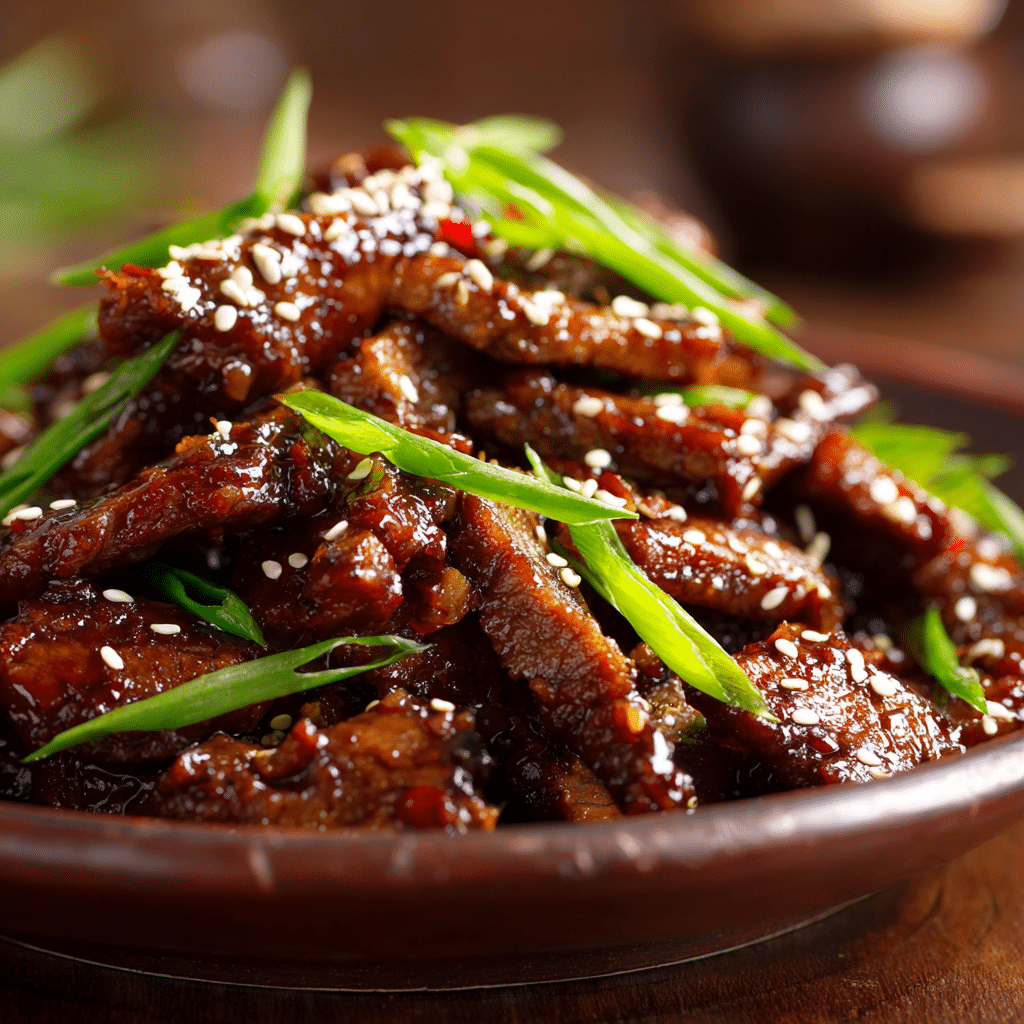
If you’re craving a savory, slightly sweet stir-fry that comes together in under 30 minutes, this Mongolian Beef recipe is your new go-to. Tender slices of flank steak are flash-fried until crispy, then tossed in a glossy brown sauce infused with garlic, ginger, and soy. It’s a dish rooted in American-Chinese takeout history, not traditional Mongolian cuisine, but its bold flavors have won over palates worldwide.
Introduction: The Story Behind Mongolian Beef
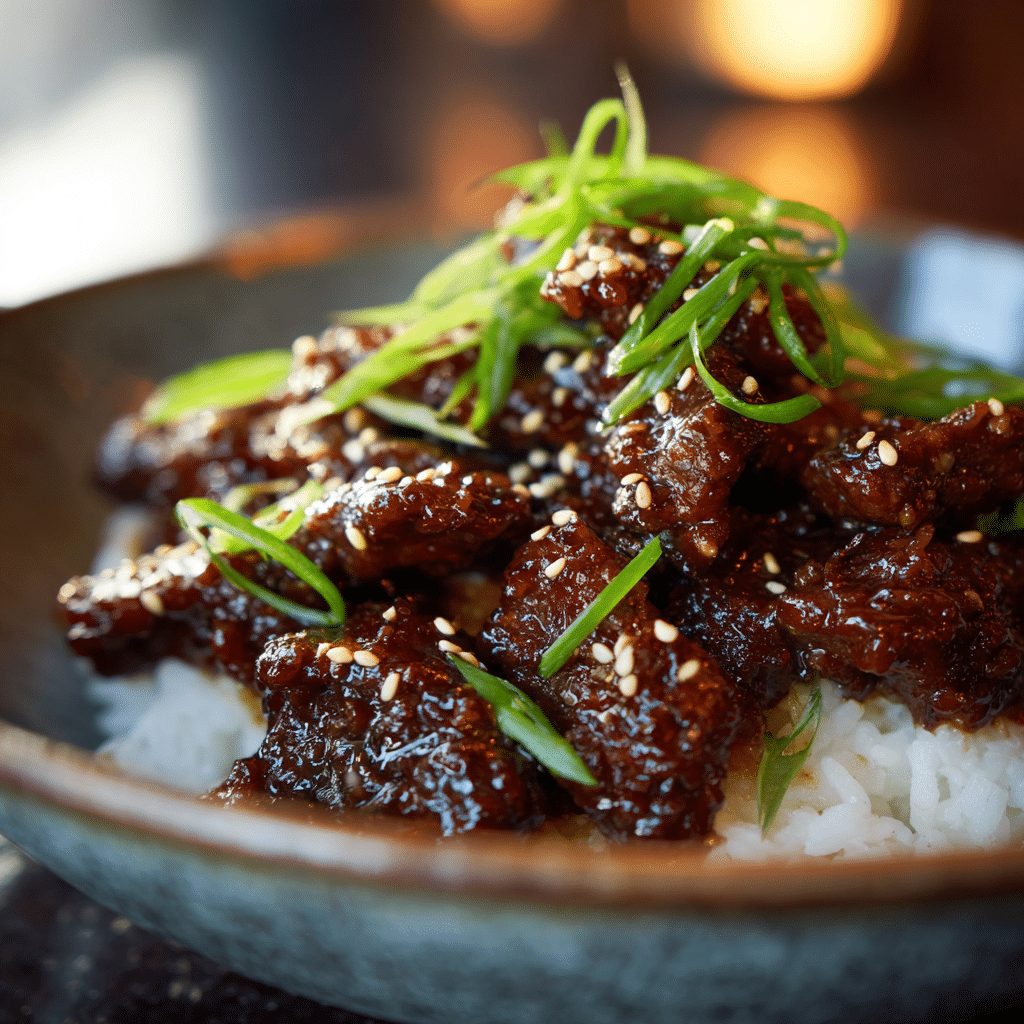
Despite the name, Mongolian Beef didn’t originate in Mongolia. This dish was actually popularized in American Chinese restaurants in the late 20th century, with P.F. Chang’s famously putting it on the map. Its misleading name likely plays into the mystique of “Mongolian BBQ”—a style of cooking developed in Taiwan in the 1950s that involves stir-frying meat on large flat griddles.
What makes Mongolian Beef stand out is its simplicity and flavor profile. It’s all about quick cooking and the contrast between crisped beef and the sticky-sweet, umami-packed sauce. When served over fluffy white rice or stir-fried noodles, it becomes a comforting and satisfying dish perfect for weeknights or family dinners.
Ingredients Overview: Why Each One Matters
Understanding the role of each ingredient ensures you get the best results every time.
Flank Steak
Flank steak is the traditional choice for Mongolian Beef due to its balance of flavor and tenderness. It’s best sliced thinly against the grain to keep it tender during high-heat stir-frying.
Substitute: Skirt steak or sirloin can be used in a pinch.
Cornstarch
Used to lightly coat the beef, cornstarch creates a crisp exterior when fried and also helps the sauce cling to the meat.
Oil (High Smoke Point)
Neutral oils like canola, vegetable, or peanut oil are ideal for flash-frying the beef without burning.
Garlic and Ginger
These aromatics are essential for building flavor. Garlic brings warmth and depth, while fresh ginger adds a slight peppery kick and brightness.
Soy Sauce (Light and Dark)
Soy sauce forms the backbone of the sauce:
-
Light soy sauce contributes saltiness and brightness.
-
Dark soy sauce adds color and richness.
Brown Sugar
Adds sweetness to balance the saltiness of the soy sauce and the sharpness of the garlic and ginger. It also helps caramelize the sauce.
Water (or Low-Sodium Broth)
Used to thin the sauce slightly so it’s not overly thick. Some variations use chicken or beef broth for added umami.
Green Onions
Added at the end for freshness and a touch of sharp, oniony crunch.
Optional: Red Pepper Flakes
For a hint of heat—totally optional but recommended if you like a spicy kick.
Step-by-Step Instructions: From Prep to Plate
Getting restaurant-quality Mongolian Beef at home starts with mastering these techniques. Here’s how:
1. Slice the Beef Thinly
Place the flank steak in the freezer for about 30 minutes beforehand—it makes slicing easier. Cut across the grain into thin strips (about 1/4 inch thick).
2. Coat with Cornstarch
Place the sliced beef in a bowl and toss it with cornstarch until evenly coated. Shake off excess. Let it sit for 10 minutes—this helps form that signature crispy texture.
3. Prepare the Sauce
In a small bowl, whisk together:
-
½ cup low-sodium soy sauce
-
¼ cup dark soy sauce
-
½ cup brown sugar
-
¼ cup water or broth
-
1 tablespoon minced garlic
-
1 tablespoon minced ginger
Set aside.
4. Fry the Beef
Heat 2–3 tablespoons of oil in a large skillet or wok over medium-high heat. Add the beef in a single layer—don’t overcrowd the pan.
Cook for 1–2 minutes per side, just until crispy and browned. Remove and set aside. Repeat in batches if necessary.
5. Cook the Sauce
In the same pan, pour in the sauce mixture. Bring it to a simmer. Let it bubble for 2–3 minutes until slightly thickened and glossy.
6. Combine and Finish
Return the beef to the pan and toss to coat in the sauce. Let it cook for 1–2 minutes until heated through. Stir in sliced green onions.
7. Serve
Serve immediately over steamed jasmine rice or lo mein noodles. Garnish with extra green onions or sesame seeds if desired.
Tips, Variations, and Substitutions
Chef’s Tips
-
Flash Frying: Use high heat and don’t overcrowd the pan—this ensures the beef gets crispy, not steamed.
-
Sauce Thickness: If your sauce thickens too much, thin it with a splash of water or broth.
-
Prep Ahead: Slice and coat your beef in advance for quicker dinner prep.
Variations
-
Spicy Mongolian Beef: Add 1–2 teaspoons of chili garlic sauce or red pepper flakes.
-
Vegetarian Version: Substitute with crispy tofu or seitan.
-
Low-Sugar Option: Reduce brown sugar to 1/4 cup or use a sugar substitute like monk fruit.
Substitutions
-
Beef Alternatives: Try chicken thighs, shrimp, or tempeh.
-
Gluten-Free: Use tamari instead of soy sauce and confirm your dark soy is gluten-free.
Serving Ideas & Occasions
Mongolian Beef is incredibly versatile and works for a range of meals:
Perfect Pairings
-
With Rice: Classic jasmine or basmati rice is perfect to soak up the sauce.
-
With Noodles: Serve over stir-fried lo mein or rice noodles.
-
With Veggies: Add steamed broccoli, snap peas, or baby bok choy for a balanced plate.
When to Serve
-
Weeknight Dinner: Quick, satisfying, and loved by picky eaters.
-
Dinner Parties: Impress guests with takeout-style flavor at home.
-
Meal Prep: Make a double batch and enjoy leftovers throughout the week.
Nutritional & Health Notes
Mongolian Beef is a protein-rich dish thanks to the flank steak, which offers iron, B12, and other essential nutrients. However, it’s important to be mindful of the following:
What’s in a Serving?
-
Protein: Around 25–30g per serving.
-
Carbohydrates: Mostly from brown sugar and cornstarch.
-
Sodium: Soy sauce-based dishes tend to be high in sodium—opt for low-sodium versions.
Healthier Tweaks
-
Lower Sodium: Use reduced-sodium soy sauces.
-
Less Sugar: Cut back on brown sugar or use alternatives.
-
More Fiber: Add extra vegetables or serve with brown rice.
FAQ: Mongolian Beef
1. Is Mongolian Beef actually Mongolian?
No, it’s not from Mongolia. The dish was created in Taiwanese and American Chinese cuisine and takes inspiration from Mongolian-style barbecue, which itself is not traditionally Mongolian either.
2. What cut of beef works best?
Flank steak is ideal because it’s lean and tender when sliced thinly. Skirt steak and sirloin are also good options.
3. Can I make Mongolian Beef ahead of time?
Yes, you can prep the beef and sauce in advance. Cooked Mongolian Beef keeps in the fridge for up to 3 days and reheats well in a skillet.
4. Is Mongolian Beef spicy?
Not typically. The standard recipe is sweet and savory. If you prefer heat, add chili flakes or a splash of chili paste.
5. Can I freeze Mongolian Beef?
Yes, freeze cooked beef and sauce together in an airtight container for up to 2 months. Thaw overnight in the fridge and reheat in a pan.
6. How can I make it gluten-free?
Use gluten-free tamari instead of soy sauce. Check your cornstarch and any other condiments for hidden gluten.
7. What’s the difference between Mongolian Beef and Szechuan Beef?
Mongolian Beef is sweeter and more soy-based, while Szechuan Beef is known for bold heat, chili oil, and numbing peppercorns.
PrintMongolian Beef Recipe: Easy, Saucy & Better Than Takeout
Tender flank steak is stir-fried until crispy and tossed in a savory, slightly sweet soy-garlic sauce. A quick and easy dinner that tastes just like your favorite takeout—if not better.
- Prep Time: 15 minutes
- Cook Time: 15 minutes
- Total Time: 30 minutes
- Yield: Serves 4
Ingredients
-
1 lb flank steak, thinly sliced against the grain
-
1/4 cup cornstarch
-
2–3 tbsp vegetable oil (for frying)
-
1/2 cup low-sodium soy sauce
-
1/4 cup dark soy sauce
-
1/2 cup brown sugar
-
1/4 cup water or beef broth
-
1 tbsp minced garlic
-
1 tbsp minced fresh ginger
-
4 green onions, sliced into 1-inch pieces
-
Optional: 1/2 tsp red pepper flakes or chili paste
Instructions
-
Slice the flank steak thinly and toss with cornstarch. Let rest 10 minutes.
-
In a small bowl, mix soy sauces, brown sugar, water, garlic, and ginger.
-
Heat oil in a skillet or wok. Fry beef in batches until crispy, 1–2 mins per side.
-
Remove beef. In the same pan, add sauce mixture and simmer 2–3 minutes.
-
Return beef to pan and toss to coat in sauce. Cook 1–2 more minutes.
-
Stir in green onions and optional chili flakes. Serve hot.