
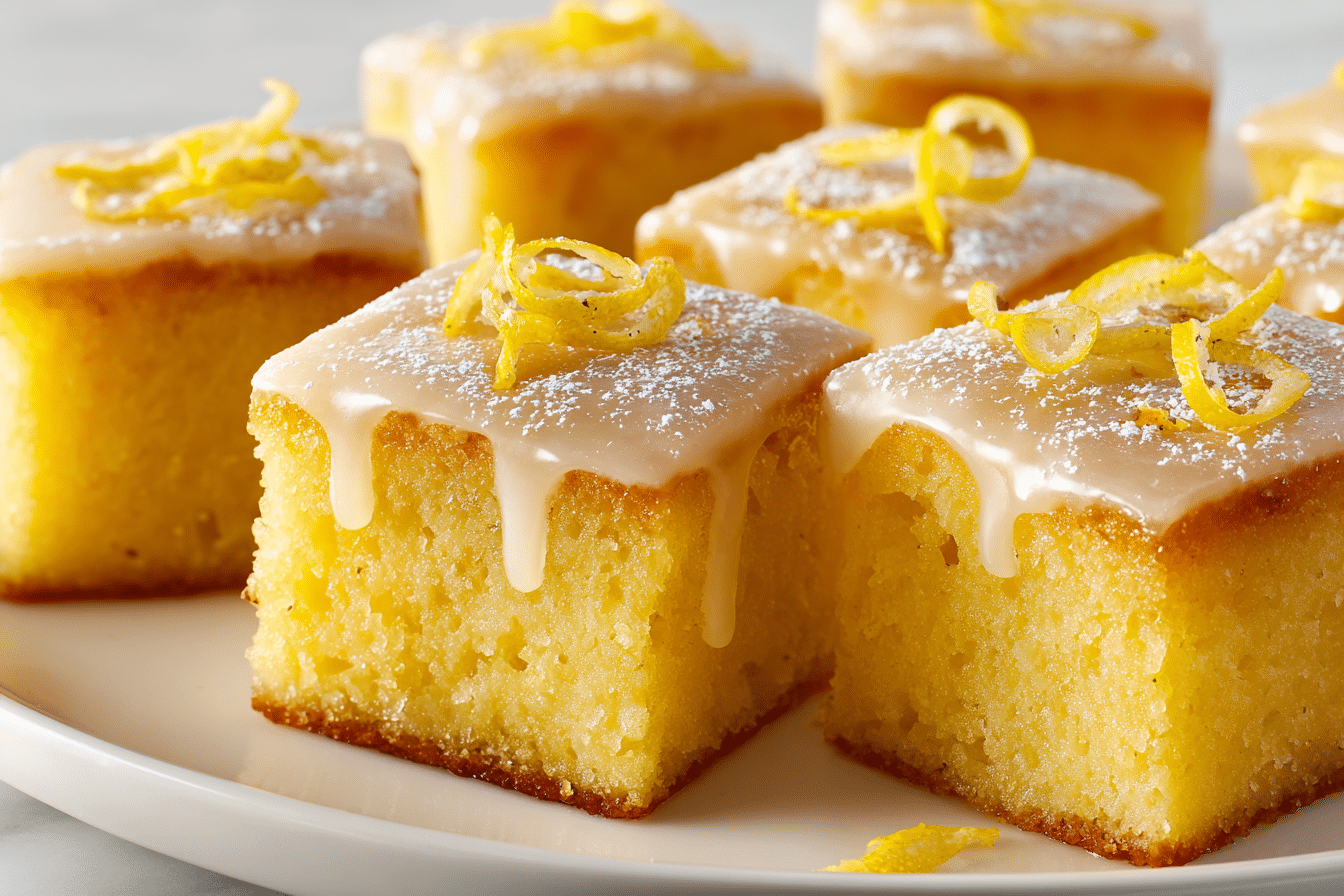
Best Lemon Brownies Recipe | Bright & Fudgy Citrus Bars brings together the dense texture of a classic brownie with the lively flavor of fresh lemon. Each square has a soft, velvety crumb that melts gently, followed by a clean citrus finish that lingers pleasantly.
These bars bake into a pale golden slab with slightly chewy edges and a tender center. A thin lemon glaze settles over the surface, adding a delicate crackle and an extra layer of citrus depth. The balance between sweetness and tang keeps every bite refreshing rather than heavy.
Unlike chocolate brownies, this version relies on butter, sugar, eggs, and fresh lemon juice to create structure and flavor. The result is rich yet vibrant, perfect for spring gatherings, afternoon coffee, or a simple dessert tray. Once sliced, the bars hold their shape beautifully, making them easy to serve and share.
Ingredients Overview
The foundation of Best Lemon Brownies Recipe | Bright & Fudgy Citrus Bars starts with unsalted butter. Melted butter gives these bars their signature dense and fudgy texture. It blends smoothly with sugar, forming a glossy base that supports the citrus notes.
Granulated sugar sweetens the batter while also contributing to the slightly crisp top. Because lemon juice adds acidity, the sugar plays an essential role in rounding out the flavor profile.
Eggs provide structure and stability. They bind the batter and help create that smooth, tight crumb. Room temperature eggs blend more evenly, preventing streaks in the mixture.
Fresh lemon zest is crucial. The zest contains fragrant oils that deliver concentrated citrus aroma without extra liquid. Finely grate only the yellow portion, avoiding the bitter white pith.
Fresh lemon juice adds brightness and gentle tang. Bottled juice lacks the same complexity, so freshly squeezed juice is strongly recommended for authentic flavor.
All-purpose flour gives the bars structure. Use a light hand when mixing to prevent toughness. A small amount of salt sharpens the citrus flavor and balances sweetness.
For the glaze, powdered sugar combines with additional lemon juice to form a smooth, pourable topping. This glaze seeps slightly into the warm bars, creating a tender surface layer that enhances both texture and flavor.
Step-by-Step Instructions
Begin by preheating the oven to 350°F. Line an 8×8-inch baking pan with parchment paper, allowing excess to hang over the sides for easy removal. Lightly grease the exposed areas to prevent sticking.
In a medium saucepan, melt the butter over low heat. Remove from heat once fully liquefied and allow it to cool slightly. Transfer the melted butter to a mixing bowl, then whisk in the granulated sugar until the mixture appears smooth and slightly thickened.
Add the eggs individually, whisking thoroughly after each addition. The batter should appear glossy and cohesive. Stir in the lemon zest and fresh lemon juice, blending until evenly incorporated.
Sift the flour and salt together in a separate bowl. Gradually fold the dry ingredients into the wet mixture using a spatula. Stir gently just until no dry streaks remain. Overmixing can produce dense, rubbery bars instead of a soft crumb.
Pour the batter into the prepared pan, spreading it evenly into the corners. Tap the pan lightly on the counter to release trapped air bubbles.
Bake for 22 to 25 minutes. The edges should appear set and lightly golden, while the center remains slightly soft. A toothpick inserted into the middle should come out with a few moist crumbs but no raw batter.
While the bars bake, whisk together powdered sugar and fresh lemon juice for the glaze. Aim for a thick yet pourable consistency. Adjust with small amounts of juice or sugar as needed.
Remove the pan from the oven and allow it to rest for about 10 minutes. Pour the glaze over the warm surface, spreading it evenly. The residual heat helps the glaze settle into a thin, delicate layer.
Allow the bars to cool completely in the pan before lifting them out using the parchment overhang. Slice into neat squares with a sharp knife, wiping the blade clean between cuts for tidy edges.
Tips, Variations & Substitutions
For a slightly deeper citrus profile, add a small amount of finely grated orange zest alongside the lemon. This adds subtle complexity without overpowering the primary flavor.
If a softer texture is preferred, reduce the baking duration by two minutes and monitor closely. For firmer slices suitable for stacking, extend baking by two to three minutes, watching carefully to avoid dryness.
A gluten-free flour blend designed for baking can replace all-purpose flour. Choose a blend containing xanthan gum for proper structure.
To reduce sweetness, decrease the glaze thickness by adding slightly less powdered sugar. The bars themselves should remain balanced, as lemon naturally offsets sugar.
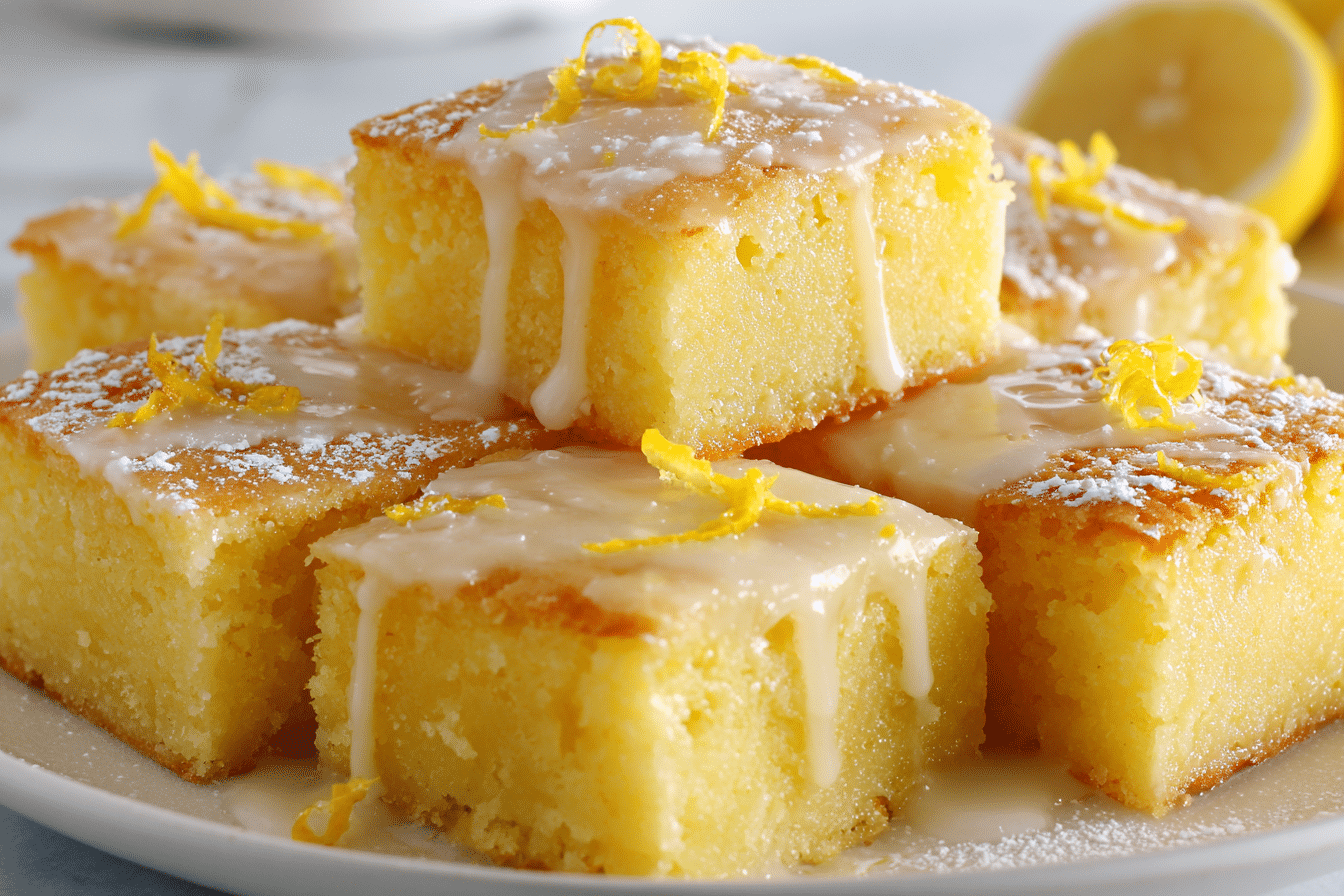
For a decorative finish, sprinkle additional lemon zest over the glaze before it sets. This adds visual appeal and enhances aroma.
Store the bars in an airtight container at room temperature for up to three days. Refrigeration extends freshness slightly, though the texture becomes firmer when chilled.
Serving Ideas & Occasions
Best Lemon Brownies Recipe | Bright & Fudgy Citrus Bars pairs beautifully with afternoon tea or freshly brewed coffee. The bright citrus flavor contrasts nicely with warm beverages.
Serve these bars at brunch alongside fresh berries and whipped cream. Their pale color and glossy glaze present beautifully on dessert platters.
They also fit well into holiday dessert spreads, baby showers, or spring celebrations. Because they slice cleanly, they travel easily for picnics or potlucks.
For a plated dessert, add a dollop of lightly sweetened whipped cream and a few thin lemon slices. The combination creates an elegant yet simple presentation suitable for gatherings both casual and formal.
Nutritional & Health Notes
These lemon brownies contain butter, sugar, and flour, placing them firmly in the dessert category. Each square provides carbohydrates for energy along with moderate fat from butter and eggs.
Lemon juice and zest contribute small amounts of vitamin C and natural plant compounds, though the overall nutritional profile remains indulgent rather than nutrient-dense.
Portion control helps maintain balance. Cutting the pan into sixteen squares creates satisfying servings without excess.
For a lighter option, consider serving smaller slices alongside fresh fruit. This approach provides contrast in texture and flavor while moderating overall sweetness.
As with most baked treats, enjoying these bars occasionally as part of a varied diet supports a balanced approach to eating.
FAQs
Can I freeze lemon brownies?
Yes, these bars freeze well. Allow them to cool completely and skip glazing until after thawing for optimal texture. Wrap the unglazed slab tightly in plastic wrap, then place it in a freezer-safe container. Freeze for up to two months. Thaw at room temperature before adding glaze and slicing.
Why did my lemon brownies turn out dry?
Dry texture usually results from overbaking or excess flour. Measure flour by spooning it into the measuring cup and leveling it off rather than scooping directly. Monitor baking closely and remove the pan when moist crumbs remain on the toothpick.
Can I double this recipe?
Yes, double the ingredients and bake in a 9×13-inch pan. Baking duration may increase slightly, typically by five to eight minutes. Watch for set edges and a softly set center as indicators of doneness.
Do I have to use fresh lemons?
Fresh lemons are strongly recommended. Fresh zest contains aromatic oils that bottled products lack. Bottled juice may produce a flat flavor and alter overall balance.
How should I store these bars?
Keep them in an airtight container at room temperature for up to three days. If storing longer, refrigeration extends shelf life slightly. Bring to room temperature before serving for the softest texture.
Can I reduce the sugar?
You may reduce the sugar in the batter by up to two tablespoons without drastically affecting structure. Larger reductions may alter texture and moisture. The glaze sweetness can also be adjusted easily.