
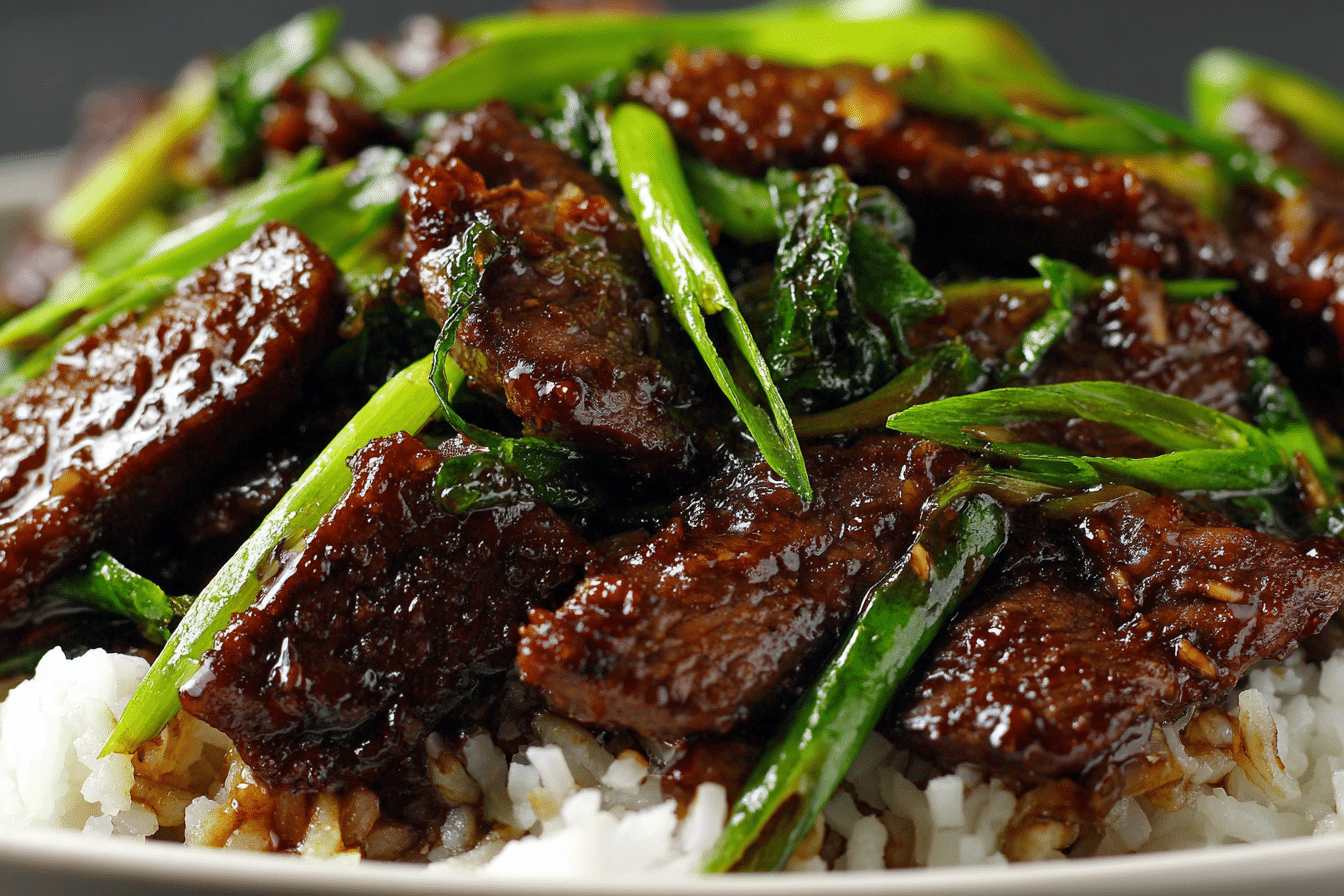
Despite its name, Mongolian Beef has no roots in traditional Mongolian cuisine. Instead, it’s a well-loved Chinese-American stir-fry known for its irresistible combination of sweet and savory flavors. Inspired by Taiwanese teppanyaki-style cooking, this dish became a restaurant staple, offering rich flavor and fast preparation.
The hallmark of this meal is its thinly sliced beef — flash-fried to perfection — coated in a glossy soy-based sauce infused with garlic, ginger, and a touch of sweetness. Green onions add a fresh contrast and pop of color that makes each bite complete.
This easy, homemade version rivals your favorite takeout and comes together in just 30 minutes using common pantry ingredients. It’s bold, flavorful, and perfect for a weeknight meal the whole family will look forward to.
Ingredients Overview
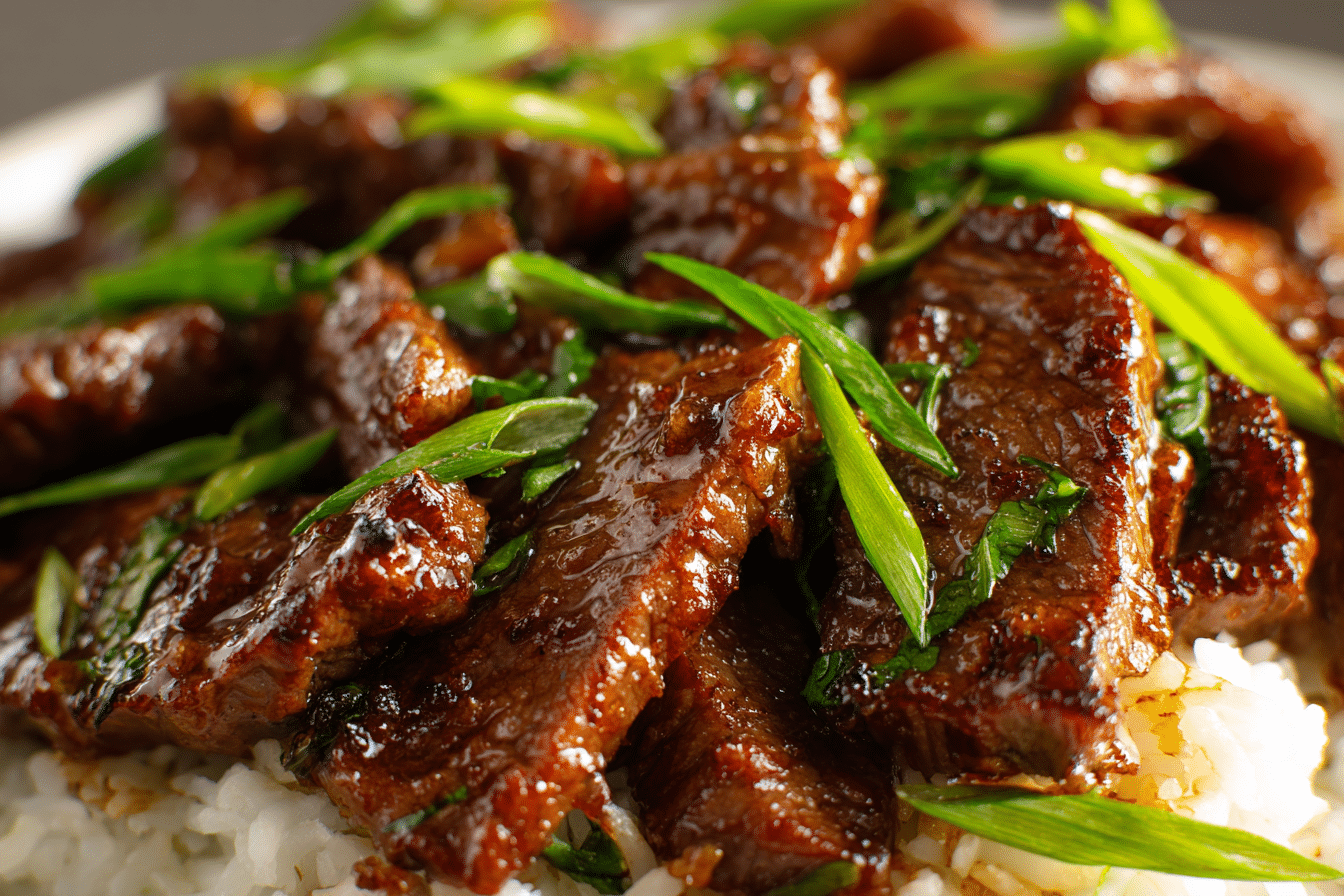
To recreate that classic Mongolian Beef flavor at home, here’s a breakdown of the key ingredients and why each one matters:
-
Flank Steak: This cut is lean, flavorful, and ideal for quick stir-frying. Slice it thinly across the grain to maximize tenderness. Sirloin or skirt steak are solid alternatives if flank steak isn’t available.
-
Cornstarch: Lightly dusting the beef in cornstarch before cooking gives it a crisp, golden coating and helps the sauce cling to the meat beautifully.
-
Soy Sauce: The salty backbone of the dish. You can use regular soy sauce or a blend of light and dark for added depth. For gluten-free cooking, tamari is a perfect substitute.
-
Brown Sugar: Adds the signature sweetness that balances the salty soy base. It also gives the sauce a deep, almost caramel-like flavor that enhances the seared beef.
-
Fresh Garlic and Ginger: Essential aromatics that bring warmth and complexity. Always go with fresh — the flavor difference is worth it.
-
Green Onions (Scallions): Added at the end for a burst of color and mild, oniony bite that brightens the dish.
-
Neutral Oil: Vegetable, canola, or peanut oil are great for high-heat stir-frying without affecting flavor.
-
Water or Beef Broth: Helps loosen the sauce without diluting its richness. Broth adds extra umami, but water works just fine.
Optional add-ins:
-
Chili flakes or sliced red chili for a spicy twist
-
Sesame oil for added aroma
-
A splash of rice vinegar to cut through the richness
Step-by-Step Instructions
-
Slice and Prep the Beef
Cut the flank steak into thin strips, slicing against the grain to ensure tenderness. Toss the pieces in cornstarch until fully coated and let them rest for about 10 minutes. This brief rest helps the starch stick and crisps the exterior when cooked. -
Make the Sauce
In a bowl, combine the soy sauce, brown sugar, garlic, ginger, and water or broth. Stir until the sugar dissolves completely. This sauce is the flavor base — sweet, salty, and aromatic. -
Cook the Beef
Heat a couple tablespoons of oil in a large skillet or wok over medium-high heat. Once hot, add the beef in a single layer. Cook in batches if needed to avoid crowding the pan. Sear the beef for about 2–3 minutes per side until golden and lightly crispy. Transfer to a plate. -
Sauté Aromatics
In the same pan, add a bit more oil if dry, then toss in the garlic and ginger. Sauté for 30 seconds or until fragrant, being careful not to burn them. -
Simmer the Sauce
Pour in your prepared sauce and bring it to a simmer. Let it cook for a couple of minutes, stirring occasionally, until it thickens slightly. -
Combine Everything
Return the cooked beef to the skillet, stirring to coat every piece in the rich sauce. Add the green onions and let everything cook together for another minute or so. -
Serve Hot
Serve the Mongolian Beef over hot steamed rice or noodles. Spoon extra sauce on top for maximum flavor.
Tips, Variations & Substitutions
-
Cutting the Beef: Always slice against the grain. This shortens muscle fibers, keeping the meat tender instead of chewy.
-
For Extra Flavor: Marinate the sliced beef for 20–30 minutes in soy sauce, garlic, and a bit of sugar before cooking.
-
Add Heat: Mix in red pepper flakes or a spoonful of chili paste for a spicy kick.
-
Dietary Swaps:
-
Low-carb: Replace sugar with a keto-friendly sweetener and serve over cauliflower rice.
-
Gluten-free: Use tamari or coconut aminos instead of soy sauce.
-
Vegan: Swap beef with seared tofu, mushrooms, or plant-based meat alternatives.
-
-
More Veggies: Stir in bell peppers, snap peas, or baby broccoli for extra texture and nutrition.
Serving Ideas & Occasions
This dish shines when served fresh off the stove. Pair it with:
-
White or Brown Rice: Classic and satisfying.
-
Stir-Fried Greens: Bok choy, Chinese broccoli, or spinach complement the rich sauce.
-
Chilled Cucumber Salad: Offers a cooling, crisp contrast.
-
Asian Noodles: For a heartier twist, try it with lo mein or rice noodles.
Mongolian Beef is ideal for busy weeknights, casual family dinners, or weekend meal prep. It holds up well for leftovers and reheats beautifully for lunch the next day.
Nutritional & Health Notes
Mongolian Beef offers a protein-rich option with bold flavor and relatively simple ingredients. Flank steak provides lean protein and essential nutrients like iron and zinc.
To lighten things up:
-
Use less sugar or substitute with a natural sweetener.
-
Opt for lean cuts of meat and trim visible fat.
-
Serve with high-fiber veggies or whole grains.
A typical serving balances carbs, protein, and fats — making it a solid choice when eaten in moderation. Add vegetables to stretch portions and boost nutrients without extra calories.
FAQs
Q1: What kind of beef works best for this recipe?
A1: Flank steak is ideal because of its texture and quick cooking time. Sirloin, flat iron, or even ribeye can work well, too. Just make sure to slice thinly and against the grain.
Q2: Can I cook this dish in advance?
A2: Yes. You can prepare the beef and sauce ahead of time and store them separately. For the best texture, fry and combine right before serving.
Q3: Why is my beef coming out tough?
A3: It’s usually due to cutting the meat incorrectly or overcooking it. Always slice thinly against the grain and sear quickly over high heat to lock in juices.
Q4: Is Mongolian Beef supposed to be spicy?
A4: Not traditionally, but you can definitely add heat if you like. Chili flakes, Sriracha, or a bit of chili oil will give it a nice punch.
Q5: What can I use if I don’t have cornstarch?
A5: Arrowroot or tapioca starch are great alternatives. Potato starch also works well. Avoid using flour as it won’t provide the same crispy coating.
Q6: Can I substitute the beef with another protein?
A6: Yes! Chicken, pork, shrimp, or tofu are all good options. Adjust the cooking time based on the protein you choose.
Q7: How long does Mongolian Beef last in the fridge?
A7: Store leftovers in a sealed container in the fridge for up to 3 days. Reheat in a skillet over medium heat to preserve texture and avoid sogginess.
Crispy slices of beef tossed in a rich soy-garlic sauce, Mongolian Beef is a quick and satisfying stir-fry that brings takeout flavor straight to your kitchen.
- Prep Time: 10 minutes
- Cook Time: 15 minutes
- Total Time: 25 minutes
- Yield: Serves 4
Ingredients
-
1 lb flank steak, thinly sliced against the grain
-
1/4 cup cornstarch
-
3 tbsp neutral oil (vegetable or canola)
-
3 garlic cloves, minced
-
1 tbsp fresh ginger, grated
-
1/2 cup soy sauce (or tamari for gluten-free)
-
1/3 cup brown sugar
-
1/4 cup water or beef broth
-
4 green onions, cut into 2-inch pieces
-
Optional: red pepper flakes, sesame oil
Instructions
-
Toss the sliced beef in cornstarch and let sit for 10 minutes.
-
Combine soy sauce, sugar, water, garlic, and ginger in a bowl. Stir well.
-
Heat oil in a skillet or wok over medium-high. Sear beef in batches until browned and crisp. Remove from pan.
-
Add garlic and ginger to the pan and cook briefly until fragrant.
-
Pour in sauce and simmer until slightly thickened, about 2–3 minutes.
-
Return beef to the pan and toss to coat. Add green onions and cook for 1 more minute.
-
Serve hot with rice or noodles.