
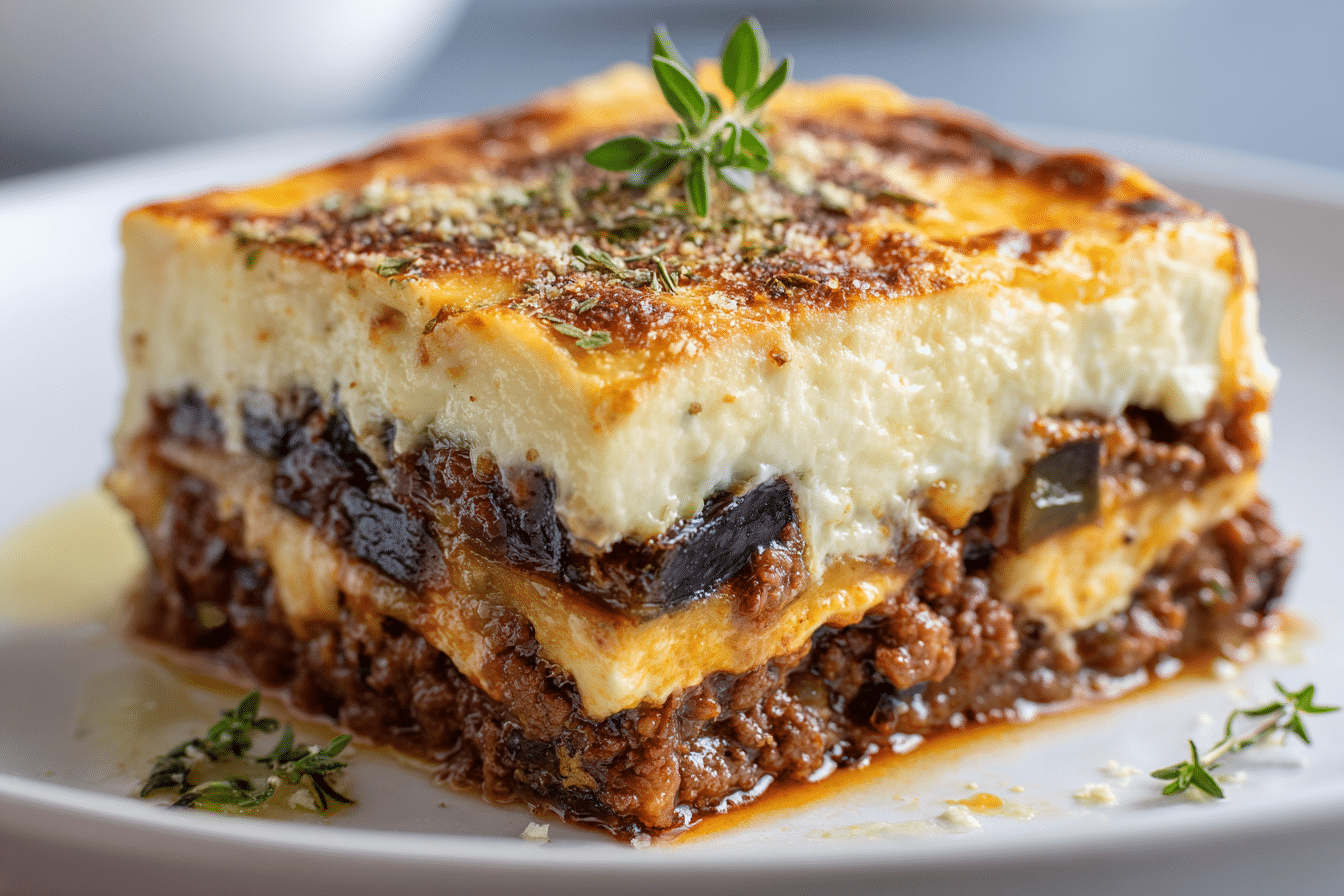
Greek Moussaka is a comforting, oven-baked classic layered with velvety eggplant, richly spiced meat sauce, and a luscious béchamel topping. This dish is deeply rooted in Mediterranean and Balkan culinary tradition, with its most iconic form hailing from Greece.
Known for its bold layers of texture and flavor, moussaka is a dish that commands attention at the dinner table. The combination of cinnamon-scented ground meat, tender vegetables, and creamy white sauce creates a harmony that is hearty, nostalgic, and satisfying. If you’re craving something traditional yet indulgent, this outrageously delicious Greek Moussaka is your answer.
Ingredients Overview
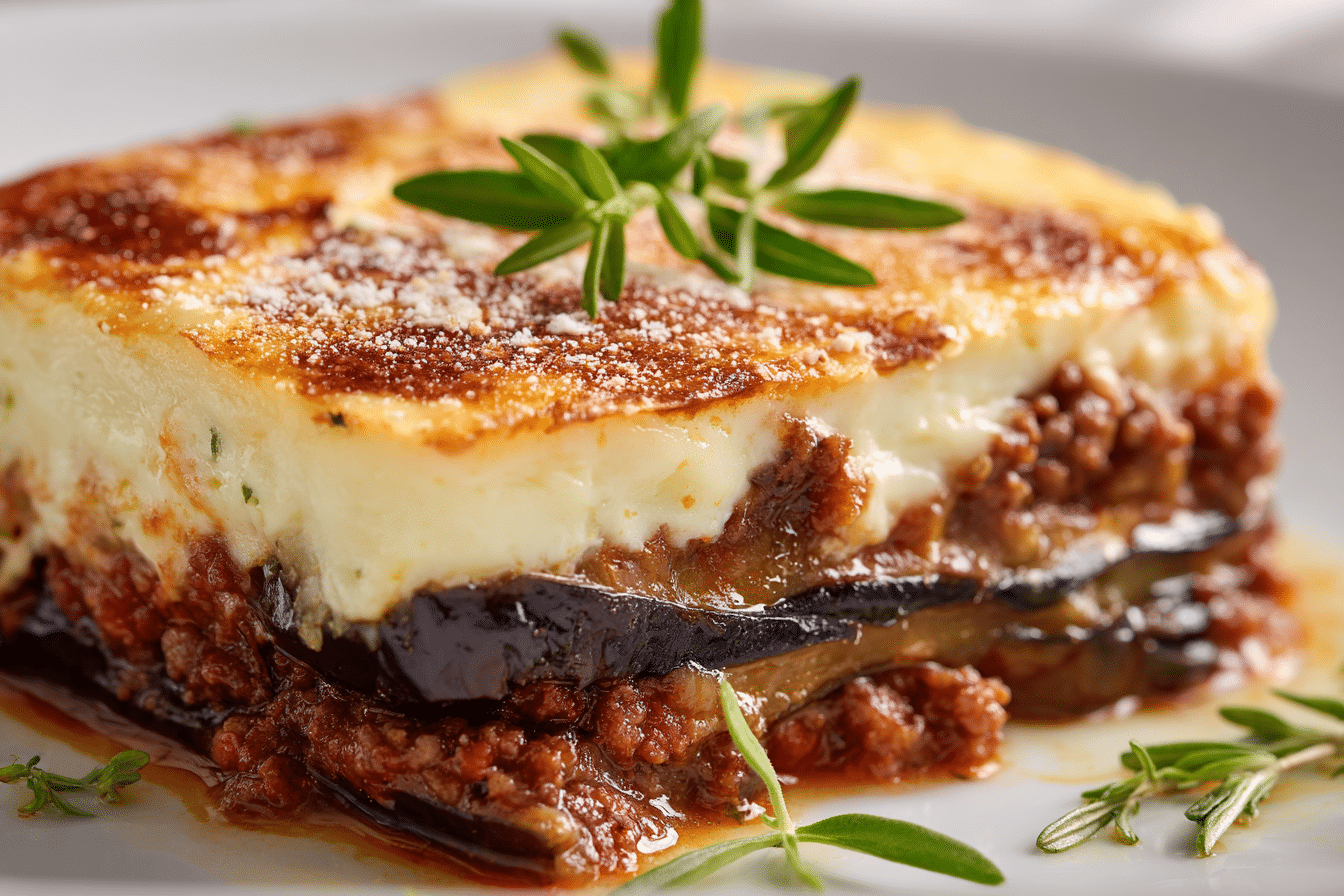
A well-made moussaka depends on the balance of high-quality ingredients and time-tested layering techniques. Here’s what goes into this flavorful dish:
Eggplant
The base of Greek moussaka is typically eggplant (aubergine). It’s sliced, salted to remove bitterness, then either baked or fried to develop a tender, slightly caramelized flavor. Look for firm, shiny eggplants without bruises. Globe eggplants work best.
Substitution tip: For a lighter version, you can bake the slices instead of frying, or substitute part of the eggplant with zucchini or potatoes.
Ground Meat
Traditionally, lamb is used, offering a deep, gamey flavor that defines Greek-style moussaka. However, beef or a beef-lamb mix is commonly used as well for a milder profile.
Alternative: For a vegetarian version, you can use lentils or a plant-based ground meat substitute.
Onion & Garlic
These aromatics build the base of the meat sauce. Minced onion and garlic are sautéed until translucent and fragrant, creating the savory depth this dish needs.
Tomato Paste & Crushed Tomatoes
These provide acidity and sweetness to balance the richness of the meat and béchamel. Tomato paste adds umami and depth, while crushed or pureed tomatoes round out the sauce.
Red Wine
A splash of red wine deglazes the pan and infuses the meat sauce with warmth and complexity. Dry red wine works best here.
Spices: Cinnamon, Allspice, and Nutmeg
The signature Greek flavor comes from warm spices like cinnamon and a hint of allspice. Nutmeg is traditionally reserved for the béchamel.
Olive Oil
Used for sautéing and drizzling on the eggplant before baking. Opt for extra virgin olive oil for authentic flavor.
Béchamel Sauce
A creamy topping made from butter, flour, milk, eggs, and a dash of nutmeg. Some versions include grated cheese like kefalotyri or Parmesan for extra richness.
Tip: Use whole milk for best consistency, and whisk constantly to avoid lumps.
Cheese
Kefalotyri is a classic Greek hard cheese, but grated Parmesan or Pecorino Romano work well too. Cheese is often folded into the béchamel or sprinkled on top before baking.
Step-by-Step Instructions
1. Prepare the Eggplant
Slice 2 large eggplants into ½-inch thick rounds. Lay them on a paper towel-lined tray, sprinkle both sides with salt, and let them sit for 30 minutes to draw out moisture and bitterness. Pat dry.
Brush with olive oil and bake at 400°F (200°C) for about 20–25 minutes until golden and soft, flipping once. Set aside.
2. Make the Meat Sauce
In a deep skillet, heat 2 tablespoons of olive oil over medium heat. Add 1 chopped onion and cook until soft, about 5 minutes. Add 3 cloves minced garlic and cook for 1 minute more.
Stir in 1 lb (450g) ground lamb or beef. Cook until browned, breaking it apart as it cooks. Deglaze with ½ cup dry red wine, simmering until the alcohol evaporates.
Add 2 tablespoons tomato paste, 1 cup crushed tomatoes, 1 teaspoon cinnamon, ¼ teaspoon allspice, salt, pepper, and a pinch of sugar. Simmer on low for 20–25 minutes until thick. Set aside.
3. Make the Béchamel Sauce
In a saucepan, melt 4 tablespoons butter. Whisk in 4 tablespoons flour and cook for 1–2 minutes to remove the raw flour taste.
Gradually pour in 3 cups warm whole milk, whisking constantly until smooth. Cook until thickened, about 8–10 minutes. Season with salt, pepper, and a pinch of nutmeg.
Remove from heat. Beat 2 eggs in a small bowl, then slowly whisk into the sauce to temper (prevent scrambling). Stir in ½ cup grated cheese. Set aside.
4. Assemble the Moussaka
In a greased 9×13-inch baking dish, layer as follows:
-
A layer of eggplant slices
-
All of the meat sauce
-
A final layer of eggplant
-
All of the béchamel sauce, spread evenly
-
Sprinkle with remaining grated cheese
5. Bake
Preheat oven to 375°F (190°C). Bake uncovered for 45–50 minutes or until golden and bubbling. Let rest for 30 minutes before slicing — this helps the layers set.
Tips, Variations & Substitutions
-
Make-ahead tip: Moussaka can be assembled a day ahead and baked fresh, or frozen before baking.
-
Low-carb version: Replace the béchamel with a cauliflower-based topping and skip potatoes if using.
-
Vegan variation: Use plant-based ground meat and a vegan béchamel made with dairy-free butter, flour, and plant milk.
-
Regional variations: Some Greek versions include a potato layer at the bottom. Turkish and Balkan versions often skip the béchamel altogether or use yogurt-based sauces.
Chef’s note: Don’t skip resting time after baking. Hot moussaka will fall apart — letting it cool slightly ensures neat layers.
Serving Ideas & Occasions
Greek Moussaka is hearty enough to stand on its own, but it pairs beautifully with a crisp green salad dressed in lemon and olive oil, or with a side of crusty bread to mop up the sauce.
For a Mediterranean-themed dinner, serve it alongside spanakopita, tzatziki, and a glass of dry red wine.
Ideal occasions include:
-
Sunday family dinners
-
Holiday meals like Orthodox Easter
-
Potlucks or gatherings — it travels and reheats well
-
Cozy fall and winter evenings when you crave rich, layered comfort food
Nutritional & Health Notes
A single serving of moussaka offers a balanced mix of protein, fats, and carbohydrates. The eggplant provides fiber and antioxidants, while the meat sauce brings iron and B vitamins.
If you’re watching calories or saturated fat, consider:
-
Using lean ground beef or turkey
-
Baking (not frying) the eggplant
-
Swapping the béchamel with a lighter milk alternative or yogurt topping
Portion control is key, as the rich béchamel and cheese can add up in calories. A side salad helps balance the meal with freshness and crunch.
FAQs
Q1: Can I freeze moussaka?
A1: Yes. Assemble the moussaka fully, let it cool, then wrap tightly in foil and freeze. It can be baked from frozen at 350°F (175°C) for about 1 hour, or until heated through. You can also freeze individual portions for easy reheating.
Q2: Why is my béchamel sauce lumpy?
A2: Lumps usually occur when the milk is added too quickly or the mixture isn’t whisked consistently. Always add warm milk gradually, whisking thoroughly after each addition. If lumps form, use a hand blender or strain the sauce.
Q3: What cheese is best for Greek moussaka?
A3: Traditional Greek moussaka uses kefalotyri, a hard, salty cheese. If unavailable, substitute with Parmesan, Pecorino Romano, or even a mix of mozzarella and cheddar for a meltier top.
Q4: How long should moussaka rest before serving?
A4: Let it rest for at least 30 minutes after baking. This allows the béchamel to set and makes slicing easier. It also enhances the flavor as the layers meld together.
Q5: Can I make moussaka without eggplant?
A5: Yes, though eggplant is traditional, you can replace it with thinly sliced zucchini, potatoes, or even sweet potatoes for a twist. Be sure to pre-cook them before layering to prevent sogginess.
Q6: Is moussaka gluten-free?
A6: Not by default, as the béchamel sauce uses flour. However, you can make it gluten-free by using a gluten-free flour blend or cornstarch in the béchamel.
Q7: How is moussaka different from lasagna?
A7: While both are layered, moussaka uses eggplant (or other vegetables) instead of pasta and features a spiced meat sauce with cinnamon and a thick béchamel topping. Lasagna typically uses a tomato-based sauce with ricotta or mozzarella and pasta sheets.
Print
A classic Greek baked casserole with layers of tender eggplant, spiced meat sauce, and creamy béchamel topping.
- Prep Time: 10 minutes
- Cook Time: 15 minutes
- Total Time: 25 minutes
- Yield: Serves 4
Ingredients
-
2 large eggplants, sliced ½-inch thick
-
Olive oil, for brushing
-
1 lb ground lamb or beef
-
1 onion, chopped
-
3 garlic cloves, minced
-
½ cup dry red wine
-
2 tbsp tomato paste
-
1 cup crushed tomatoes
-
1 tsp ground cinnamon
-
¼ tsp allspice
-
Salt and pepper, to taste
-
4 tbsp butter
-
4 tbsp flour
-
3 cups whole milk, warm
-
Pinch of nutmeg
-
2 eggs, beaten
-
1 cup grated kefalotyri or Parmesan cheese
Instructions
-
Salt and rest eggplant slices for 30 mins, then pat dry. Brush with olive oil and bake at 400°F (200°C) for 20–25 minutes.
-
Sauté onion and garlic in olive oil. Add ground meat and brown. Deglaze with red wine.
-
Stir in tomato paste, crushed tomatoes, cinnamon, allspice, salt, and pepper. Simmer for 20–25 minutes.
-
Make béchamel: melt butter, whisk in flour, then slowly add warm milk. Cook until thick. Add nutmeg, then stir in beaten eggs and ½ cup cheese.
-
In greased 9×13-inch dish, layer eggplant, meat sauce, more eggplant, and top with béchamel. Sprinkle with cheese.
-
Bake at 375°F (190°C) for 45–50 minutes. Let rest 30 minutes before serving.