
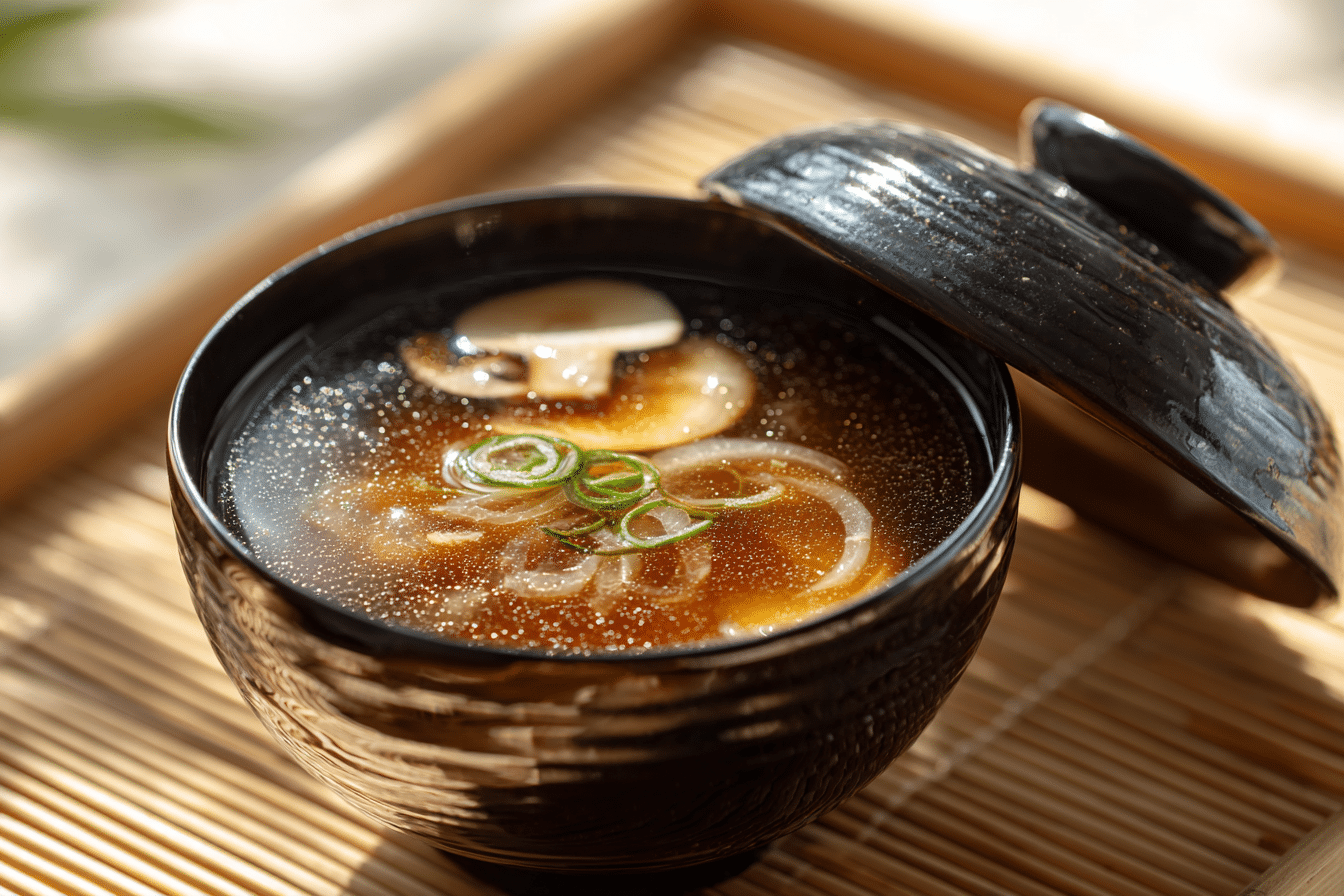
Japanese Onion Soup is a simple yet deeply flavorful dish often served as a starter at Japanese steakhouses and hibachi restaurants. Unlike the heavy, creamy French-style onion soup, this version is light, clear, and infused with the rich umami of dashi broth, sweet caramelized onions, and a touch of soy sauce.
Traditionally topped with finely sliced scallions and sometimes a few mushrooms or fried onions for garnish, this soup is the perfect palate cleanser or appetizer. It’s soothing, aromatic, and ready in about 30 minutes — ideal for pairing with sushi, teriyaki dishes, or a minimalist Japanese meal.
Ingredients Overview
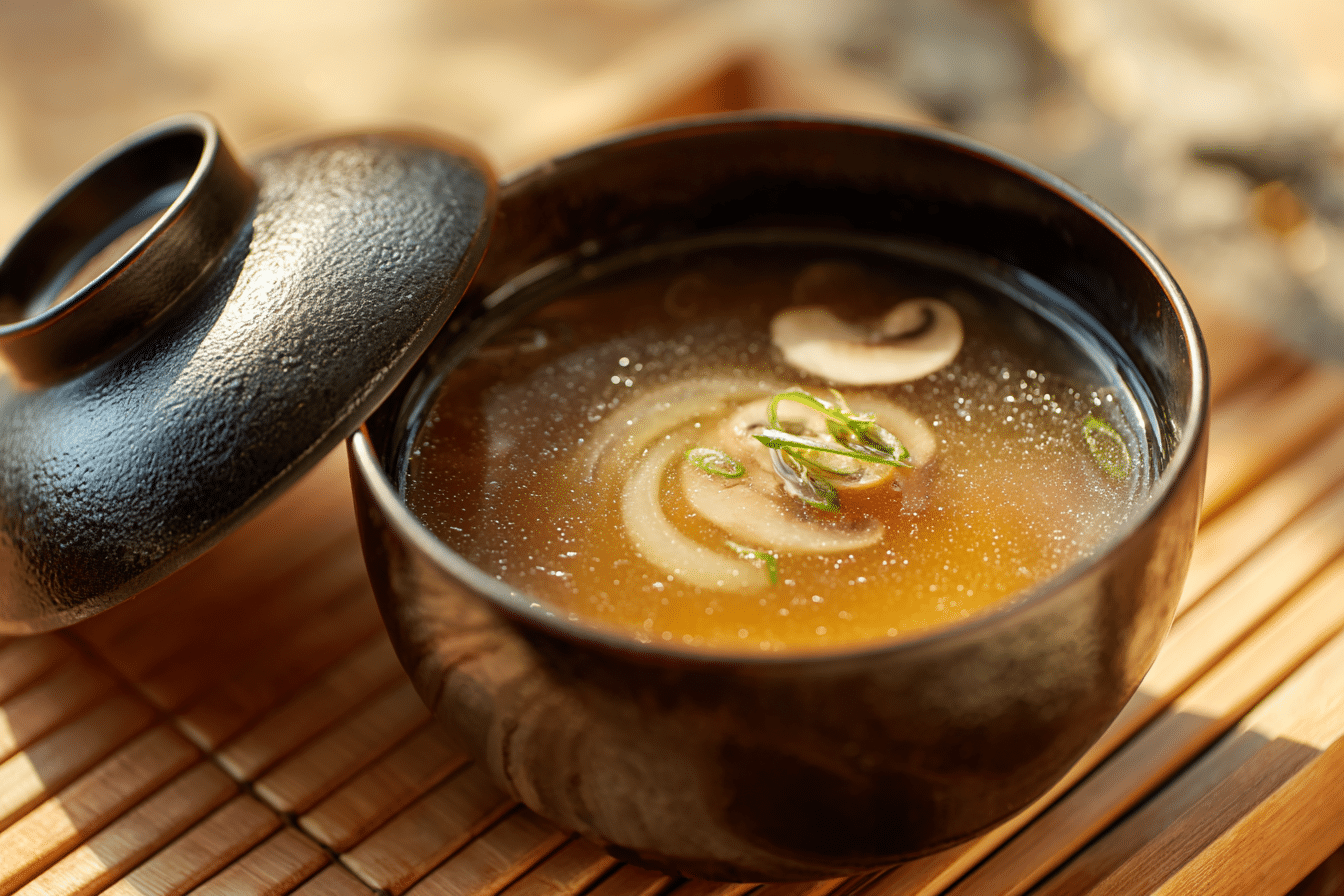
Japanese onion soup relies on just a few key ingredients, but each one plays a vital role in creating depth and balance.
Broth Base
-
Dashi Broth: The soul of Japanese soup cooking — made from kombu (dried kelp) and bonito flakes. You can make it from scratch or use high-quality dashi granules.
-
Soy Sauce: Adds saltiness and umami.
-
Mirin (Optional): A sweet rice wine that softens the flavor with subtle sweetness.
-
Salt: Adjusts final seasoning.
Vegetables
-
Onion: Sliced and slowly sautéed or simmered — provides the signature flavor. Yellow or white onions work best.
-
Mushrooms (Optional): Shiitake or button mushrooms enhance the umami and add body.
-
Garlic (Optional): Adds mild warmth if used sparingly.
Garnishes
-
Green Onions (Scallions): Sliced thin for color and freshness.
-
Crispy Fried Onions or Tempura Bits (Optional): For texture.
-
Tofu Cubes or Wakame (Optional): If you want to make it heartier.
Substitutions:
-
Use vegetable broth with soy sauce and mushroom powder if you don’t have dashi.
-
Skip mirin or replace it with a touch of sugar if needed.
Step-by-Step Instructions
1. Prepare the Dashi Broth (If Making Fresh)
-
In a saucepan, combine:
-
4 cups water
-
1 piece kombu (about 4-inch square)
-
-
Heat slowly over medium heat. Just before it boils, remove kombu.
-
Add 1 cup bonito flakes. Simmer for 2 minutes, then strain through a fine mesh.
Skip this step if using instant dashi granules. Just dissolve per package instructions.
2. Cook the Onions
-
Thinly slice 1 large yellow onion.
-
In a large pot, add 1 tbsp neutral oil (or a little sesame oil for flavor).
-
Sauté onions over medium-low heat for 10–12 minutes until soft and translucent (not browned).
-
Add 1 clove garlic, minced (optional), and sauté 1 more minute.
3. Build the Soup
-
Pour in 4 cups of dashi (or broth).
-
Add:
-
1½ tbsp low sodium soy sauce
-
1 tsp mirin (optional)
-
Salt to taste
-
Optional: a handful of sliced mushrooms
-
-
Bring to a gentle simmer and cook uncovered for 10–15 minutes.
4. Strain (Optional)
-
For a very clear broth like hibachi-style, strain out onions and solids before serving.
-
For a more rustic, flavorful version, leave the onions in.
5. Garnish and Serve
-
Ladle soup into bowls.
-
Top with thinly sliced green onions.
-
Add crispy fried onions, wakame, or tofu cubes if desired.
-
Serve hot.
Tips, Variations & Substitutions
-
Make it Vegetarian: Use kombu and dried shiitake mushrooms instead of bonito flakes in your dashi.
-
Add Texture: Fried garlic chips, crispy onions, or enoki mushrooms make great toppings.
-
Low-Sodium Tip: Use low-sodium soy sauce and dashi for better control.
-
Storage: Keep broth and garnishes separate. Reheat broth gently to preserve flavor.
Flavor Variations
-
Add miso paste for a miso-onion fusion.
-
Add chili oil or grated ginger for a warming kick.
-
Stir in a splash of sake for an extra depth of flavor.
Serving Ideas & Occasions
This soup is delicate but flavorful, making it ideal as a starter or side dish.
Pair With:
-
Sushi or sashimi
-
Hibachi-style grilled meats and vegetables
-
Tempura
-
Rice bowls or soba noodles
-
Light bento lunches
Serve At:
-
Japanese-themed dinners
-
Clean eating or low-calorie meals
-
Cold weather lunches
-
Simple, calming dinners when you’re under the weather
Nutritional & Health Notes
Japanese onion soup is naturally:
-
Low-Calorie & Light: Great for digestion and balanced meals.
-
Hydrating: High water content and warming.
-
Gluten-Free Friendly: Use tamari instead of soy sauce.
Add tofu or wakame for a touch of protein and minerals. Skip the fried toppings to keep it clean and simple.
FAQs
Q1: What makes Japanese onion soup different from French onion soup?
A1: Japanese onion soup is clear, light, and broth-based using dashi and soy sauce, while French onion soup is rich, topped with cheese, and often includes beef stock and bread.
Q2: Can I make this without dashi?
A2: Yes, you can use vegetable broth with a dash of soy sauce and mushroom powder for umami. It won’t be the same, but still delicious.
Q3: How long does the soup keep in the fridge?
A3: Up to 4 days. Reheat gently to preserve the delicate flavors. Add garnishes just before serving.
Q4: Is it okay to leave the onions in the soup?
A4: Absolutely! Many people enjoy the soft, sweet onions in every spoonful. Straining is mostly for presentation.
Q5: Can I use red onions instead of yellow?
A5: Yellow or white onions are preferred for sweetness and clarity. Red onions will color the broth and alter the flavor.
Q6: Can I make this spicy?
A6: Yes, add a few drops of chili oil, a pinch of red pepper flakes, or a small slice of fresh chili.
Q7: Can I make it in advance?
A7: Definitely. Prepare the broth and refrigerate. Add garnishes fresh for best texture and aroma.
A light, flavorful Japanese onion soup made with umami-rich dashi, soft onions, and a touch of soy sauce. Perfect as a starter or a soothing meal on its own.
- Prep Time: 10 minutes
- Cook Time: 15 minutes
- Total Time: 25 minutes
- Yield: Serves 4
Ingredients
-
4 cups dashi broth (or substitute)
-
1 large yellow onion, thinly sliced
-
1 tbsp neutral oil
-
1 clove garlic, minced (optional)
-
1½ tbsp soy sauce
-
1 tsp mirin (optional)
-
Salt to taste
-
Optional: mushrooms, tofu, or wakame
-
Garnish: sliced green onions, crispy onions
Instructions
-
In a large pot, sauté onions in oil until soft (10–12 min). Add garlic, cook 1 min.
-
Add dashi, soy sauce, mirin, and any optional mushrooms.
-
Simmer uncovered for 10–15 minutes.
-
Strain for a clear broth or leave onions in for rustic style.
-
Ladle into bowls and garnish. Serve hot.